...This Agenda is a plan of action for people, planet and prosperity... We are resolved to free the human race from the tyranny of poverty and want and to heal and secure our planet…

Search This Blog

Wednesday, February 19, 2014

Civil society groups caution Green Climate Fund on accountability

Civil Society groups from the North and South have expressed dissatisfaction with the Green Climate Fund (GCF) over accountability.

 “We state that we are not satisfied with the way the GCF Board is engaging the Civil Society and the lack of accessibility and availability to documents is an issue of grave concern,” charged Janet Redman from the Institute of Policy Studies.

The concerns were raised made during the North – South Strategy Meeting held in Bali, Indonesia.

“We need to have greater accountability built on the GCF; structures, processes, consultations and participations, programs, finance and project cycles at the global and national levels. This should be from the start to ensure its success, transparency and building of confidence,” said Prof. Shaddad Mauwa who represented Pan African Climate Justice Alliance (PACJA).

PACJA is concerned about the corporate capture of the GCF process and the source of the Green Climate Fund.

Lidy Nacpil from the Jubilee South Movement noted that the next two years will be crucial on what the South movements will be doing without permanent commitment and support for the GCF and therefore the need to maintain the option to reject the GCF if it was not shaping up.

However, Meena Reman, the Southern CSOs active observer, raised a concern that the development of the GCF was going on the wrong direction towards the World Bank model and IFS.

“We also note that some GCF board members from the developed countries believe that the GCF is not accountable to the Conference of Parties (COP),” she said.

Commenting on multi-stakeholder engagement, Liane Schalatek from the Heinrich Boll Foundation, UK,  noted that the text produced needed to be much stronger on its emphasis on the process of Multi-stakeholder engagement for which it needed to be built at all levels of engagement and decision making.
 
The meeting has drawn CSOs representatives from North to South who will engage the GCF Board members with a clear strategy developed during the two day strategic meeting.

The GCF Meeting of the board is scheduled to take place from 19th – 21st February, 2014 at the Bali Nusa Dua Convention Center in Bali, Indonesia.


Carbon trade is a false solution to quest for climate justice

Ghana is one of several African countries taking a keen interest in the carbon trading scheme, which offers payment for planting and protecting forest areas. 

Adoption and promotion these schemes – including the Clean Development Mechanism (CDM) and the REDD plus, which stands for Reducing Emissions from Deforestation and forest Degradation – present financial opportunities.

The World Bank, in 2010, put the value of the global carbon market at $142 million.

Farmers and other groups are concerned about whether they will ever enjoy such benefits.

George Amankwaah has been growing trees for over 10 years in Ghana’s Brong Ahafo region. Like most Ghanaian agro-foresters, he wants to benefit from this global carbon market.

“This carbon credit, some African countries are earning money out of it but in Ghana here, we don’t understand carbon credit because we have not been trained on how to earn income for farmers,” he complained.

Ghana has joined the international REDD+ readiness process through the World Bank’s Forest Carbon Partnership Facility (FCPF), which aims at creating capacity to fully engage in and utilize the REDD+ mechanism to address climate change adaptation and mitigation.

In 2012, the country was also included in the UN-REDD program, though no financial support has yet been allocated to Ghana.

To benefit from carbon trading, farmers are provided technical support to calculate the payments they are entitled to – according to how much carbon is stored in the trees over their life span.

Funding for the scheme comes from a variety of international sources, including the United Nations, the World Bank and the Global Environment Facility.

The payments are made by polluting companies in Europe and America who want to reduce their environmental impact by compensating for their carbon dioxide emissions.

This is a valuable opportunity creating income for local farmers, restoring the degraded land and also helping to tackle global warming.

Farmers living in deforested and degraded land in parts of Africa have begun earning carbon credit payments by planting trees.

However, climate justice activists are contesting the credibility of such schemes in mitigating climate change.

“Carbon credit is not the way out because what the world needs is the physical elimination of carbon dioxide from the atmosphere. There is no way that the North will continue their ways of production and consumption, emitting more carbon and thinking that whatever they are doing here, they are paying us to suck it out; it will never work,” stated Augustine Njamnshi of the Pan African Climate Justice Alliance (PACJA).
 
According to him, “carbon trade is a false solution; land grab, the non-recognition of rights of indigenes and local communities over resources will be happening if we don’t go into it and start fighting from within.”

Civil society organizations in Africa have declared that the “opportunities and limitations of REDD+ remain uncertain and Africa should exercise caution in matters of REDD+ and carbon markets.”

Story by Kofi Adu Domfeh 

Tuesday, February 18, 2014

African energy leaders see global climate framework uncertainty as critical

African energy leaders see global climate framework uncertainty, high energy prices, and commodity prices as the critical issues driving Africa’s energy agenda this year.

This is according to the 2014 World Energy Issues Monitor, released by World Energy Council (WEC).

The African views are in contrast with the global view, where high energy price volatility has for the first time replaced climate framework as the top critical uncertainty.

“Our African survey finds that, in contrast with the global findings, climate framework has become an even more critical issue. Africa is dramatically vulnerable to climate change, and Africans are becoming more aware that climate change is an urgent and real issue rather than something that only countries with large emissions should worry about,” Bonang Mohale, WEC Vice-Chair Africa, commented at the report launch at the Africa Energy Indaba in Johannesburg, South-Africa.
 
In Africa, electricity supply remains a critical concern, with growing demand, lack of required investment, and increasing power shortages across the continent.  Renewable energy remains a high-priority issue.

As a change from last year’s findings, African national governments and regional institutions are taking actions in energy efficiency and regional interconnection, while investment cooperation with China and India is viewed with increasing importance.

The report captures the views of over 800 energy leaders including ministers, chief executives and the heads of the WEC’s national members committees covering 84 countries. 
 
In its global findings, climate framework uncertainty is now perceived by energy leaders to have less impact than in the previous three years of the study. 

Meanwhile, carbon capture, utilisation and storage (CCUS) continues to be viewed as a technology having limited impact. 

Energy leaders are also increasingly concerned about the sector’s ability to access the capital markets for funds towards energy infrastructure, when set against a continued recessionary backdrop.

Christoph Frei, WEC Secretary General, said “the fact that both climate framework and CCUS are perceived to be issues of less impact is bad news not only in terms of emissions mitigation, but also for the development of robust and resilient energy infrastructure.  Our energy systems are in a state of massive expansion and transition, and the signals we see today provide clear evidence of the urgent need for more robust, coherent, long-term frameworks for planning our future investment.”

The World Energy Council (WEC) is the principal impartial network of leaders and practitioners promoting an affordable, stable and environmentally sensitive energy system for the greatest benefit of all.

Formed in 1923, WEC is the UN-accredited global energy body, representing the entire energy spectrum, with more than 3000 member organisations located in over 90 countries and drawn from governments, private and state corporations, academia, NGOs and energy-related stakeholders.

WEC informs global, regional and national energy strategies by hosting high-level events, publishing authoritative studies, and working through its extensive member network to facilitate the world’s energy policy dialogue.


Thursday, February 13, 2014

What climate change and slave trade in Africa have in common

The Island of Gorée, according to UNESCO, is an exceptional testimony to one of the greatest tragedies in the history of human societies – the slave trade. 

The Island, which lies off the coast of Senegal, opposite Dakar, was the largest slave-trading centre on the African coast, from the 15th to the 19th century. Today it continues to serve as a reminder of human exploitation and as a sanctuary for reconciliation.

It was on this Island that climate justice actors drawn from over 40 countries in Africa met to draft a declaration – dubbed the Gorée Declaration, after a strategic review of the outcomes of the Climate Talks in Warsaw, Poland.

The choice of the Island has two purposes, says Augustine Njamnshi, the Technical and Political Affairs Chairperson of the Pan African Climate Justice Alliance (PACJA).

First is to appreciate the experience “our forefathers went through and have that feeling of fighting because at the time that they were fighting against slavery, they were meeting concrete walls and mountings but today slavery is over; in honour of their fighting spirit, we need to fight for climate justice”.

He added secondly that what happened on the Island is a shame to the world, emphasizing “that was injustice at that time, it remains injustice today in many other forms, including climate injustice”.

“If people are suffering and dying in Africa because of a problem that they did not cause and the world is behaving as if there is nothing wrong, then it’s injustice; Africans must come together, Africans must to motivated and ignited by the fact of what happened on this Island as an epitaph of shame to the world to fight this injustice,” Mr. Njamnshi stated.

According to him, climate change injustices have continued to be perpetuated by polluter countries through non-committal and non-compliance with obligation of the climate treaties.

Indeed climate change is a global phenomenon – floods, draughts and wild fires are being recorded in the North and South.

The situation in Africa must however be prioritized, says Mithika Mwenda, PACJA Secretary General.

Scientific reports indicate Africa is the most impacted region in the globe, yet contributes the least to the greenhouse gases which cause climate change.

“The problem of climate change is really affecting Africa’s development and because this is not the problem we have caused, we have to focus and put pressure on the countries which have cause the problem so that they compensate African countries so as not to stop, affect or retard our development,” noted Mithika.

The Gorée Declaration and Plan of Action will catalyze civil society to action at the national levels in the next two years ahead of the international climate conference in Paris in 2015.

Among other things, they are demanding that Annex 1 Parties (industrialized countries) urgently close the emission gap, to keep temperature rise to below 1.5ºC consistent with science and African position as well as capitalize the Green Climate Fund in a way which is equitable, and at scale that is sufficient to deliver adaptation, and mitigation actions.
 
African countries are also to mobilize local financial resources that improve budget allocation of 5% to support local climate change adaptation and mitigation actions.


Story by Kofi Adu Domfeh/ in Dakar-Senegal

Wednesday, February 12, 2014

2014 Climate Change and Environmental Reporting Awards launched

The Pan African Climate Justice Alliance, PACJA, has launched the second edition of the African Climate Change and Environmental Reporting (ACCER) Awards in Dakar, Senegal.

The launch was held on the Island of Goree, off the Senegalese coast, on the sidelines of a five-day African Civil Society Post-Warsaw and Post-2015 strategic meeting.

Secretary General of PACJA, Mithika Mwenda said, “the event will honor African journalists who have excelled in reporting on issues of climate change and the environment and whose stories are impacting policy decisions and livelihoods on the continent”.

The awards is designed to reward exemplary journalists and media houses whose reporting and analysis practically influence national policy formulation and implementation processes on climate change issues – and towards accelerated access to public service delivery.
 
Identification of recipient of the awards will be through a mass public-driven and interactive process and an independent panel of eminent professionals will carefully review the various nominations to determine deserving winners. 

The maiden edition of the Awards, held in Nairobi Kenya in June 2013, attracted over 100 entries from print and electronic journalists across the continent.

Mr. Mithika however noted that PACJA was not impressed by the number of entries obtained from Francophone countries and thus urged journalists in Senegal and other French-speaking countries to show interest by sending in many entries in the forthcoming Awards.

He added, “I am very confident that the ACCER Awards will drive environmental reporting across Africa for sustainable development”.

Story by Kofi Adu Domfeh/ in Dakar-Senegal

African civil society encouraged to continue climate justice struggle

The Senegalese government has hailed the Pan African Climate Justice Alliance (PACJA) for its excellent tool of environmental protection and urged them to continue the struggle for climate justice.

Ms. Penda Kante Thiam who represented the Senegalese Minister for Environment urged the African Civil Society Organizations (CSOs) under the auspices of PACJA to keep the faith and to be positive in the struggle for climate justice.

Officiating the opening of a five-day Post-Warsaw strategic meeting in Dakar, Ms. Penda Kante said, “We need you as much as you need us. I believe change starts now and starts with us. We definitely need to lead by example.”

PACJA Secretary General, Mithika Mwenda called on Civil Society Organizations in Africa to be visible at the national level, to be consistence with national aspirations and to work together with their governments to achieve their objectives.

“It remains the mandate of PACJA to provide an enabling environment for African Civil Societies to share experiences and networks so as to effectively contribute into the national and international climate change debates,” he added.

Mr. Mouhamet Lamine Ndiaye who represented Oxfam at the meeting said “Oxfam will be focusing on the linkages between climate change and its impact on agricultural production and productivity”.

“We are at Oxfam are hopeful that this meeting will conclude with a clear strategy on climate change in relations to achieving the Millennium Development Goals (MDGs),” he charged.

The meeting has drawn 80 participants from 40 African countries with a mandate to construct a unified regional campaign strategy on climate justice.

Mr. Augustine Njamnshi, the PACJA Technical and Political Affairs Chairperson and Ms. Azeb Girmai of the Least Developed Countries Watch - Ethiopia while deliberating at this event said “Africa CSOs on climate justice needs massive and innovative mobilization strategy for advocacy and lobbying towards 2015”.

Story by Kofi Adu Domfeh/ in Dakar-Senegal

Monday, February 10, 2014

African Civil Society assemble in Dakar over Climate Change

A civil society meeting to discuss climate change and its impacts on the African development is underway in Senegal’s Capital, Dakar.

Participants are reflecting on outcomes of the UN Climate Conference held in Warsaw, Poland late last year and lay plans for enhanced peoples and community participation in the ongoing negotiations for a new climate change agreement.

Hosted by the civil society network, Pan African Climate Justice Alliance (PACJA), in partnership with Oxfam, the meeting brings together about 80 participants from 40 countries, drawn from research and advocacy NGOs, research and academic institutions, faith-based organizations, youth and women as well as indigenous and farmers groups across Africa.

PACJA Secretary General, Mithika Mwenda noted “it remains the mandate of PACJA to provide an enabling environment for African Civil Society to share experiences and network so as to effectively contribute into the national and international climate change debates.”

He added that “to underscore the link between climate change and particularly the UNFCCC process and the ongoing dialogue on Sustainable Development Goals, the meeting will also discuss Post-2015.”

Lamine Ndiaye, the Oxfam Pan African Programme Officer for Economic Justice, has urged the African CSOs to remain steadfast in lobbying governments to ensure pro-poor climate responses to enable vulnerable communities to build resilience and adapt to the growing impacts of climate change.

“This meeting organized by PACJA puts into action what we agreed in Warsaw when we walked out of negotiations protesting inaction by world leaders,” he said, while calling civil society from the rest of the world to follow suit in such consultation in preparation for the next international Conference.

During the UN Climate Change Conference held in Warsaw, Poland on 11 – 22 November 2013, around 800 civil society observers walked out of negotiations protesting what they termed as Governments’ failure to agree on various issues such as mitigation goals, adaptation, loss and damage and finance, seen as the best deal for poor and vulnerable people.

The unprecedented action, which threw the entire negotiations into crisis, precipitated a series of discussions and reflections among CSOs, among them the “next actions after the walk-out.”

The Civil Society promised to mobilize communities in subsequent period and return into negotiations in Lima with more voices from the people across the world.

The meeting in Dakar is part of this mobilization. Among issues to be discussed at the meeting will be strategies to strengthen coherence among civil society concerning calls and demands around priority issues emerging from international climate change negotiations processes.

Participants will also agree on a mechanism for regular communications, sustained coordination, and implementation of activities in the countdown to the next climate change conference, which will be held in Peru later in the year.

Story by Kofi Adu Domfeh

Friday, February 7, 2014

Bishop cautions politicians to be wary of ‘Boys Abre’ chorus

The Methodist Bishop of Kumasi, Right Reverend Prof. Osei Safo Kantanka, has asked Ghanaian political leaders to be sensitive to the plight of the citizenry on the state of the economy.

According to him, the mass chorus of “Boys Abre”, especially amongst the youth, should be a wake up call for leadership to respond to the development needs of Ghanaians.

“Listen to what the young people of our country are saying; “boys abre, boys abre”; what do they mean by that? The boys are indeed suffering and so are the girls,” stated the Bishop.

Speaking at a leadership lecture in Kumasi, Rev. Safo Kantanka observed the tendency of Ghana’s political leaders to secure their positions is ruining the country.

He says the politicians are more concerned about winning the next election and not what people need to develop the country.

“Immediately one election is over, our politicians strategize for the next elections, and nobody appears to be strategizing to boldly tackle the fundamental economic problems that will transform our country,” he observed.

Rev. Safo Kantanka has called for education of the masses to challenge leadership to be accountable and responsible in their positions.

The health of the Ghanaian economy, especially the free fall of the cedi against the international trading currencies, has dominated public discussions in recent times.

The Central Bank has taken certain measures to stabilize the cedi, including injection of additional dollars into the economy and controlling forex trading.

Interest groups, including the Trades Union Congress, have called for a radical overhaul of the country’s economy.

According to Prof. Samuel Lartey, the Vice President of the Global Leadership Network, the country must come to terms with the turbulent times and change accordingly.

“What we are doing now is every Ghanaian is marking the economy on our glory land, on our past; we are no longer in our past, we are moving into the future. When we were living in our glory land, we could buy anything; we could spend anyhow, now we’ve gone into the turbulent times, we must change,” he admonished.

Story by Kofi Adu Domfeh

Thursday, February 6, 2014

Ghana’s commitment to SARD-SC project assessed

Key partners working under the Support for Agricultural Research and Development for Strategic Crops (SARD-SC) in Africa have been assessing Ghana’s commitment to provide counterpart funding to benefit from the project.

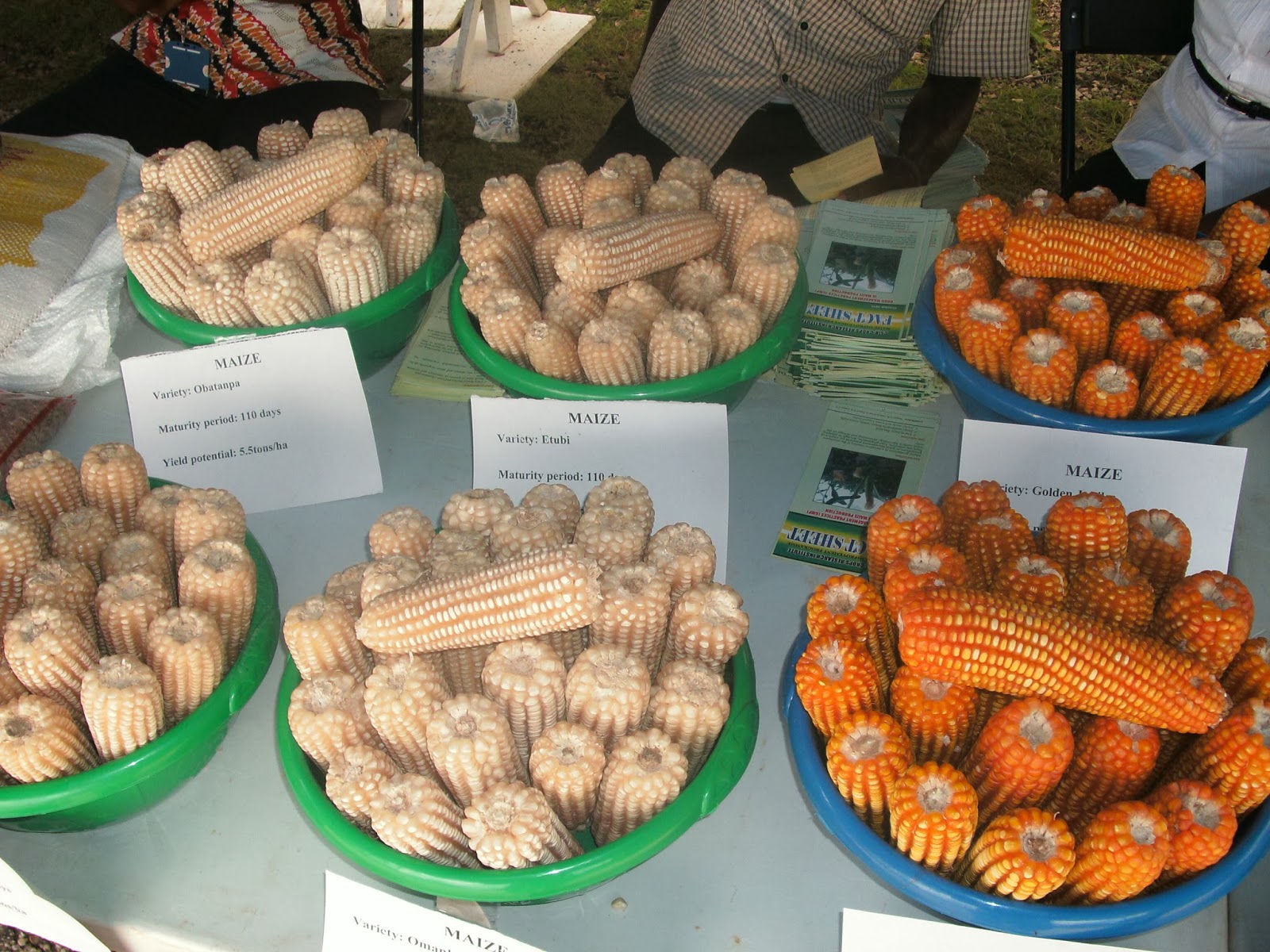
The $63 million project focuses on four commodities – rice, wheat, maize and cassava – identified by African Heads of States as key to making impact on farmer livelihoods.

The five years project took off in January 2013, with funding from the African Development Bank (AfDB) to improve food security and lift the income levels of farmer in Africa.

Governments of the 20 beneficiary African countries, including Ghana, are expected to provide counterpart funding – including land, office space, and laboratories – as conditions to access the support.

Ghana has interest in maize and rice identified as critical cereals crops needed to increase productivity.

“We’ve been communicating with colleagues and they have indicated to us the involvement of the government in terms of infrastructure and personnel; but we need to document it to show the bank funding it that Ghana is meeting its commitment,” said Project Coordinator, Dr. Chrysantus Akem.

The SARD-SC is a research, science, and technology development initiative, which offers farmers better access to markets, improve livelihoods, and tackle poverty through enhanced capacities of beneficiaries to sustainable development in the region.

“We really believe that if that grandmother is growing maize and the yields are very low, through this project we can introduce new varieties that can double of even triple yields of those maize, we’ll make a difference,” noted Dr. Akem of the International Institute of Tropical Agriculture (IITA).

The target of the project is to raise productivity by 20% in the four commodity areas.


Story by Kofi Adu Domfeh

Commercialization of research products to take off in 18 months

The commercialization of research products under the Council for Scientific and Industrial Research (CSIR) should take off within the next 18 months.

The ‘CSIR Plus’ company was incorporated in 2009 to run as a public-private venture, functionally independent from the mainstream corporate CSIR management.

Director-General of the Council, Dr. Abdulai Baba Salifu says a comprehensive business plan for CSIR-Plus is being worked out to ensure institutes under the Council have the impetus to be self-sufficient.

“We now have commissioned some consultants to draw exhaustive business plan that will cut across the CSIR; so that will be the blueprint for CSIR Plus to operate on as a business and all encompassing business plan that will ensure there is a centralized mobilization of funds,” he told Luv Biz in Kumasi.

CSIR is the largest scientific research organization in Ghana, operating under the Ministry of Environment, Science and Technology (MEST). 

Some of 13 research institutes under the Council have over the years developed and released improved crop varieties and their production technologies.

A number of consumer foods on the Ghanaian market are from the fold of the CSIR but it hardly receives any financial rewards.

The CSIR Plus has the primary purpose of identifying and commercializing CSIR technologies and services on sound business lines.

“It will be a very viable venture,” Dr. Salifu stated.

The CSIR has been challenged to wean itself from government subventions.

According to Minister for Environment, Science and Innovation, Dr. Joe Oteng-Adjei, the Council has the potential to create enough wealth to support itself and fuel the country’s economic growth.

This, the minister said, should become a thing of the past, adding that the CSIR must be able to sell its output to generate enough funds to support its activities.


Story by Kofi Adu Domfeh

Wednesday, February 5, 2014

BRRI seeks funding to reactivate abandoned brick factories

The Building and Road Research Institute (BRRI) of the Council for Scientific and Industrial Research (CSIR) is seeking government funding to reactivate abandoned brick factories in the country.

Officials say the initiative would improve the quality of locally produced building materials to meet market demands.

Bricks have been the ideal construction material for thousands of years.
The reasons for this include beauty in diversity, long life and value retention as well as comfort fire protection. Clay brick is also an environmentally sustainable product.

In spite of the multitude of benefits in the use of bricks, patronage in the Ghanaian construction is on the decline.
 
The BRRI wants to revive the local brick and tile industry, in supporting government to use local materials in construction.

Director of the Institute, Dr. Eugene Atiamo believes an increase in brick patronage as well as use of pozzolana would reduce dependence on clinker cement in building and construction.

According to him, government policy of using 60percent of local materials in construction by 2015 would be missed “if we are not able to resuscitate this brick industry and then expand the pozzolana producing unit”.
 
The BRRI has been promoting the use of pozzolana cement after years of research into the product.

Patronage however remains weak, as some players in the housing industry complain of lack of access.

The BRRI Director says Ghana would be paying the price of buying very expensive cement if issues of demand and supply of local building materials are not addressed.

“Now we’re importing cement from China, Brazil, all over; why should we? Yet cement is not superior to bricks, not even earth blocks,” he quizzed.

Whilst urging players in the housing industry to develop taste for local building materials, Dr. Atiamo says government consultants need to specify pozzonala in housing contracts to drive demand.

“If we pump in at least Gh₵50-100million a year to build houses from our local resources, in five to ten years time we would have reduced this huge deficit if housing,” he advocated. “And once we are able to increase demand for our local materials, I bet you the investors, the private sector will go into it.”


Story Kofi Adu Domfeh

Innovator contributes sustainable solution to Africa’s food security

Achieving sustainable food security is one of the biggest challenges of our time. With growing population numbers, less arable land and unpredictable weather conditions, there is major concern that the supply of food across the planet will fall short of the demand.

While innovators, scientists, and the private and public sector are working to find solutions to this looming crisis, Sanoussi Diakite, the Senegalese winner of the Innovation Prize for Africa (IPA) 2013 in the social impact category, has created technology to dehull fonio, a nutritious grain grown in 16 African countries. His innovation can help relieve famine in Africa.

With 200 million people in West Africa facing food insecurity and malnutrition, fonio cereal is one of the best solutions to improving health and malnutrition. The cereal could solve food security on the continent.

However, the husking of fonio has historically been a time-consuming and labor intensive process that has worked against the popularity of the cereal; it takes over an hour to husk a kilogram of fonio.

Mr. Diakite’s invention has revolutionized the process. His machine can dehull the same quantity of fonio in less than eight minutes, unlocking the potential of a plentiful and affordable staple food that grows regardless of soil conditions.

Mr Diakite’s innovation encourages more people to grow and eat fonio; a massive step towards establishing food security on the continent.


Tuesday, February 4, 2014

Ghana needs enforceable laws for forest conservation, says CSO

Ghana would need to formulate laws that are enforceable at the community level to succeed in forest conservation programmes, says Obed Owusu Addae of Civil Response, a civil society group.

Ghana has promulgated laws to prohibit and control certain activities in forest reserves, especially chainsaw lumbering.

But there have been challenges due to high demand for lumber to serve the local market as well as other wood products to support livelihoods of local communities living in forest areas.

Mr. Owusu Addae says forest conservation should not be at the expense of community rights.

“Somebody staying less than 10meters to the forest, you tells such person to come to the district capital to buy wood and take it back to the community to do his project; it’s impossible”, he observed.

He describes the forest as an “open resource” in which anyone can move in and exploit, hence the need to fashion out enforceable laws. “So I think we need to formulate the laws that will work at the grassroots.”

Civil Response has been involved in negotiations between Ghana and the European Union on the Voluntary Partnership Agreement (VPA) to ensure communities’ perspectives are brought to bear in the agreement.

Mr. Owusu Addae says there seems to be some progress in community engagement on forest conservation but law enforcement has been challenging.

He called for efficient resourcing of forestry officials to monitor and curtail illegal activities in the forest reserves.

Tropenbos International Ghana is working with the Forestry Commission and other partners to protect such reserves.

Programme Director at TBI, Samuel Nketiah, is confident community engagements under activities of the VPA will help ensure the integrity of the forest.

Story by Kofi Adu Domfeh


Monday, February 3, 2014

Street food vendors empowered to assert role in Ghana’s food value chain

The Ghana Street Foods Project is targeting local food vendors with business management skills to enhance the food value chain.

A baseline survey conducted by the Project indicated most of the vendors are skilled in cooking dishes to feed majority of the population, but lacked managerial skills to run their enterprises as a business.

The Project therefore has the objective of building capacity and improving livelihoods of operators in street food enterprises. It is a partnership between the University of Copenhagen, the Kwame Nkrumah University of Science and Technology (KNUST) and the Food Research Institute, funded by the Danish Development Agency (DANIDA).

Some selected food vendors in Kumasi have benefited from one week training in record keeping, financial management and customer relationship as well as formation of vendor associations to benefit from collective action.

“These vendors are at the midpoint of the chain; they connect the producer to the consumer, so once they are efficient with what they do, it means that they can procure higher quantities and cost of production comes down, then the final consumer benefits from higher quality and also affordable meal,” stressed James Osei Mensah, a lecturer at the Department of Agric Economics at the KNUST and a PhD student on the Project.

He says the project has the goal of connecting players within the food value chain – from the producer to the processor and to the final consumer.

Mr. Osei Mensah observed this will ensure farmers easily identify their market as the vendors absorb most of the locally grown crops.

The beneficiary vendors are excited at the opportunity to learn.

“If not for this we were ignorant of the work that we are doing…. Now I know how to manage my business and I can even teach my colleagues what I’ve learnt,” said Obeng Stephen of Alaska Fast Foods.

An impact assessment of the training on the beneficiaries will inform scale-up of the project to other areas.


Story by Kofi Adu Domfeh 

Translate

Popular Posts