...This Agenda is a plan of action for people, planet and prosperity... We are resolved to free the human race from the tyranny of poverty and want and to heal and secure our planet…

Search This Blog

Monday, January 20, 2014

Komla Dumor, eulogized by the man in Kumasi

It was the dawn of a New Year in 2005 when the teaming listeners of Luv Fm in Kumasi woke up to hear the exciting voice of Komla Dumor on their radio.

Radio listeners in Kumasi welcomed the decision of the Multimedia Company to transmit live JOY FM’s Super Morning Show on sister station, LUV FM.

Transmitting the Show live in Kumasi was part of the Multimedia’s resolve to bring qualitative information and entertainment to the doorstep of every Ghanaian.

I was assigned to hit the streets and offices in Kumasi to sample views of the public after the maiden broadcast. This was a period I had just taken up an internship with Luv Fm, after my sojourn in Nigeria. Indeed I knew little to nothing about a certain Komla Dumor, hence had the least of interest in doing a vox-pop on his Show in Kumasi.
But the outcome of my interactions with people in the Garden City exposed me to the personality behind the Super Morning Show.

For the English language listenership in the Garden City, the joy was the opportunity to access the ‘Boss Playa’, as Komla was fondly known, in their homes, offices and vehicles.

For others, it was the platform offered for locals to get their socio-economic concerns across.
 
The joint broadcast attracted positive comments from sections of the public in Oseikrom and this formed the content of my first news report on JOYNEWS – an exciting moment for a young journalist.

I would later meet the man Komla Dumor with his team during the SMS Road Show in Kumasi – a professional gentleman par excellence, adored and respected.

I would peep through the studios of Luv Fm and stand in awe watch him at Adum during the road shows as he broadcast in dexterity and power.

Any serious and forward-looking journalist would take something from this broadcast journalist, even before he became a world citizen working with the BBC.


Komla Dumor was simply an inspiration!

Friday, January 17, 2014

AIT to establish Open University center in Kumasi

The Accra Institute of Technology (AIT) is setting up an Open University center in Kumasi by September this year.

President of the Institute, Prof. Clement Dzidonu says other centers will be established in Takoradi, Sunyani, Wa and Tamale as part of its drive to encourage affordable and flexible access to university education in Ghana.

“The future of education is e-education, from the primary school to the university….There is no future without technology,” he observed, emphasizing that distance education without technology is a thing of the past.

AIT started in 2009 as an independent technology-focused university offering campus-based and open university degrees. It is modeled on internationally recognized institutes of technology like the Massachusetts Institute of Technology (MIT) and the Indian Institute of Technologies (IITs).

Prof. Dzidonu says Open University poses no challenge in infrastructure expansion because students need no space to learn.

According to him, Ghana needs to deploy technology to facilitate the country’s development process, stating that every education will be e-learning in the next decade.

“In ten years time, any serious university who doesn’t deploy technology to deliver their programs, whether they are campus-based or open-learning will certainly be out of business,” he stated.

The AIT President noted that Ghanaian students can access high quality programmes from top universities outside Ghana without necessarily traveling outside.

Meanwhile, a former Minister of Communications, Dr. Benjamin Aggrey Ntim, has noted Ghana has a good footing in the deployment of information communication technology in all facets of socio-economic development.

He is emphatic on the application of ICT to make education easily accessible and affordable to majority of Ghanaians.


Story by Kofi Adu Domfeh

Wednesday, January 15, 2014

Kuapa Kokoo launches 20th anniversary committing to child labour combat

Ghanaian farmer-based organisation, Kuapa Kokoo Limited, has launched its 20th anniversary with a renewed commitment to lead in efforts at combating child labour in cocoa growing communities.

The Child Labour Department of the Kuapa Kokoo Farmers’ Union (KKFU) aims to stop children from engaging in harzadous work in cocoa growing communities, through advocacy, education and sensitisation programmes at the community level.

“It is through these relentless efforts of Kuapa Kokoo to combat child labour that they gained international recognition from ILO, a world body fighting unconventional labour issues globally. The ILO has partnered Kuapa since 2010 in its fight against child labour,” stated Managing Director, Emmanuel Arthur.
Kuapa Kokoo Limited was formed in August 1993 as a result of a government policy to liberalize the cocoa sector in Ghana.

According to Mr. Arthur, the founding fathers had a mission “to develop Kuapa Kokoo into a formidable farmer-based organization, able to mobilize quality cocoa and cocoa products (from its members), improve the members’ livelihood and satisfy our customers”.

He says this has become a reality and the organization is “still doing even more” as one of the best cocoa buying company in the country.

Kuapa Kokoo is reckoned as the biggest cocoa farmers’ cooperative organization in Ghana with over 85,000 members spread across the Ashanti, Western, Central, Eastern and the Brong-Ahafo regions. Kuapa is also the pioneering Fairtrade farmer based organization in Africa and members pride themselves as owning a chocolate company – Divine Chocolate – in the UK and the USA.

“The farmers of Kuapa Kokoo are very delighted to be the proud owners of their own cocoa buying company. The reasons being that they have access to markets that are willing and ready to purchase their produce,” stated Mr Arthur.

The organisation has been divided into three structures, working in harmony to bring Kuapa Kokoo to its current state of success. These include the Kuapa Kokoo Farmers Union (KKFU) – in charge of the farmers’ welfare; Kuapa Kokoo Credit Union (KKCU) – handles the monetary aspect of the farmers by providing them with loans; and Kuapa Kokoo Limited (KKL) – which buys the cocoa from the farmers and sells them to foreign partners.

President of the KKFU, Madam Fatima Ali announced that “over the years, Fairtrade premiums have been used to fund projects such as building of schools, construction of boreholes, employing extension officers, providing medical care for members, machetes for farmers and offering skill trainings to female farmers”.

A year-long activity has been planned to commemorate the 20th anniversary of Kuapa Kokoo on the theme: “Twenty years of empowering smallholder cocoa farmers: Kuapa’s Unique Achievements”.


Story by Kofi Adu Domfeh 

Tuesday, January 14, 2014

Kumasi abattoir to ease access to wholesome meat products

The Kumasi Abattoir Company Limited has unveiled plans to afford the public easy access to wholesome meat products.

This includes the opening of additional outlets for processed meat to augment the existing three and an upscale of its door-to-door delivery activities.

The Kumasi Abattoir operates a mechanized factory in food animal slaughtering – dressing is under strict meat inspection to ensure carcass from the facility is hygienic for human consumption.

Assistant Manager Marketing, Michael Tongban tells Luv Biz the abattoir is committed to serving the public with healthy products.

“I am aware that people want to have access to our meat but because we don’t have more outlets people don’t know how to get our products to buy, so we’ll open more outlets and push more meat vans into the door-to-door activities so that people can get the meat products to buy,” he stated.

He however says the facility is challenged in charging commercial fees for its services due to its social service posture to encourage butchers to slaughter under wholesome conditions.

This, according to Mr. Tongban is hampering the company’s financial standing to procure machinery for enhance service delivery.

“If the government can come in to support us in terms of finances so that we can acquire new machines, because all our machines are import-base and the interest rate is making our operations very challenging. So we’ll be glad if the government can assist us to expand our operations,” he requested.

The Kumasi Abattoir currently serves four regions of Ghana and processes 26 products with plans for additional animals.

Acting Production Manager, Randy Afful is encouraging patronage of facilities at its disposal to reduce the risk of consuming unwholesome products.

“Regards the slaughter of sheep and goats, with our gas system it helps us to eliminate a lot of the carbon content that is often associated with the scrap car tyres which is the main cause of cancer and heart diseases,” he said.

The abattoir is promoting the use of the gas system to curtail the traditional slaughtering through the use of car tyres to burn the animals before peeling off the skin, posing serious environmental and health hazards.

Story by Kofi Adu Domfeh

Monday, January 13, 2014

Ghana is producing graduates for yesterday’s jobs – Prof. Dzidonu

A human resource gap analysis is to be carried out this year by the Accra Institute of Technology (AIT) to ascertain the undersupply and oversupply of skill sets demanded by Ghanaian industries.

President of the Institute, Prof. Clement Dzidonu, says the study will inform the country on the reality of graduate unemployment and the direction for tertiary institutions in running their courses.

“Nobody, no where can put a figure on the graduate unemployment and in which area,” he observed.

“The gap analysis basically is ‘what are the demands of industry for particular skills – engineering, business, IT?’ Then we also see what we are producing in terms of the supply. Then we see the gap and based on that we advise universities,” Prof. Dzidonu explained.

AIT as an independent technology-focused university has already undertaken similar study for the Government of Burundi.
 
According to the renowned Professor of Computer Science, Ghana is not producing quality graduates to meet the needs of the economy.

“I think we don’t have graduate unemployment; we have produced a lot of people for yesterday’s job,” said Prof. Dzidonu, noting that some companies in Ghana cannot access graduates to employ because the universities are not producing them.

He cited an instance where an online advertisement by AIT for the position of Administrative Officers attracted over 1,500 graduate applicants within a week, whilst the position of Engineering Lab Technicians had less than 50 applicants – majority of whom were already working.

“The economy itself has transformed,” stated Prof. Dzidonu. “The Americans have shown that in the past where when there is productivity in the economy, it is due to employment; now they are having productivity without full employment, growth without full employment, which shows that in today’s age it’s not the numbers, it’s the quality of the people you produce.”

He believes the application of technology and provision of quality education is the way forward because “there is no point training people either in business, in humanities, in any field without a good dose of IT because I cannot see any serious company today which is not run using ICT”.

He is confident the human resources gap analysis would help Ghana address the problem of graduate unemployment.


Story by Kofi Adu Domfeh

Tuesday, January 7, 2014

GTBank strategizes to boost its retail business in Kumasi

Guarantee Trust Bank Ghana would be opening four additional branches in Kumasi in the course of 2014, five years after venturing the local market.

The bank has over the period run on a single regional branch and expects the expansion to ease customers’ access to products and services.

Two of the networks would be located in the central business district of Adum, whilst the other two will be at Alabar and Suame.

Henry Obimpeh, Branch Head of GTBank in Kumasi, describes the five years of the bank’s operation in the Ashanti region as good and impressive.

He tells Luv Biz the expansion drive is a result of growth in business and change in operational strategy.

“Initially we were doing commercial banking purely but now we realize that the retail market is also booming and for that matter we need to take advantage of that and serve our retail customers,” he said.
 
The first two branches should be up by this first quarter of the year.

According to Mr. Obimpeh, the Bank will leverage on its electronic-based products to satisfy customer needs in 2014.

He noted that other products, like the ‘Senior Account’ for pensioners are being introduced to drive the business.


Story by Kofi Adu Domfeh 

Monday, January 6, 2014

Nepotism in human resource recruitment hurting businesses – ACE Consult

Business organizations require competent human resources to drive productivity at the workplace.

But some local companies in Ghana are getting hurt due to their failure to engage professional services in undertaking recruitment, observed Marilyn Owusu, a management consultant and educational advisor.

According to her, quality recruitment processes of organizations are influenced and compromised in the quest to secure employment for family and friends.

She has therefore cautioned businesses and other corporate institutions to be wary of nepotism in their recruitment for effective operational management.

“Because jobs are scarce these days, most companies try to do their own kind of recruitment so that they don’t waste lots of money in terms of recruitment, but if companies would get professionals to do their recruitments for them, I think the rate of [staff] turnover will be low,” she noted.
 
Marilyn Owusu, who is Managing Director of ACE Consult, a leading management consultancy firm in Kumasi, has also emphasized the need for businesses to work with a strategic plan to increase productivity.

“Don’t have a business plan that is elaborate because you want to use it to get a loan; but have a business plan that basically helps you to know exactly what your organization stands for and for you to know the key characteristics of personnel that should man the different areas to be able to bring in a lot of productivity,” she said.

ACE Consult offers recruitment services to organizations and educational advice to students who want to study in the US. The firm has a corporate social responsibility of offering free career guidance for people in schools, churches and other groups.


Story by Kofi Adu Domfeh

Friday, January 3, 2014

…as Kumasi wakes up to New Year 2014

Commercial and administrative activities are yet to fully resume in Kumasi after the Christmas and New Year break.

The streets of the metropolis are relatively empty with shops opening late. The heavy vehicular and human traffic in the city centre experienced ahead of the yuletide have almost disappeared.

Observations indicate serious working atmosphere at the Central Business District of Adum, Kejetia and the Central Market is yet to pick pace.

Workers at both public and private establishments are seen taking up their posts and warming up for serious work in the second week of the first month to commence business for the year.

The most active commercial enclave in the Kumasi metropolis perhaps is the offices of the Diver and Vehicular Licensing Authority (DVLA) as hundreds of vehicle owners hasten to register their new vehicles.

An average of 150 vehicles is being registered daily but car owners have expressed worry about the slow registration process.

Vehicles have queued up along the Aboabo-Airport Roundabout stretch of the road making it difficult for movement of other vehicles.

The situation is expected to continue at least in the first two months of the year.
 
As the year 2014 bubbles in, businesses and individuals in the Ashanti regional capital would be strategizing to make the most of 2014 in productivity and success.


Story by Kofi Adu Domfeh 

Thursday, January 2, 2014

Baptist pastor warns of terrible times if Ghanaians stay in corruption

The insurgence of robbery attacks and other social vices would continue to be manifested in the Ghanaian society if the citizenry fails to live in accordance with the dictates of their religion.

This is the observation of Rev. Robert Asante, Head Pastor of Grace Baptist Church in Kumasi when he spoke to Luv Fm on his New Year message.

According to him, the high percentage - over 70 percent - of the population claiming to be Christians contradicts the high levels of corruption in the country.

Rev. Asante therefore concluded that people in the Churches are practicing corruption because they have compromised their faith in attempt to get worldly satisfaction.

“All those who call themselves Christians should live by the tenants of our faith; they should live for Christ; they should take the example of Jesus Christ who came to model what a real human being should be like,” he stated.

The real need of each of us is to have life and real life is in Jesus, said the Pastor, noting that people are being dispossessed of their wealth because the nation is not living as Christ expects.

“Don’t let us be stealing the resources of the nation as we are doing. Public officers, politicians, even pastors who are taking advantage of people, let’s live for Christ, let’s serve humanity because Christ came to serve humanity; let’s serve one another and we’ll be better off than individuals amassing wealth and getting armed robbers to attack us.”
 
Rev. Asante admonished that terrible things are ahead unless Ghanaians change their ways of life.

“Politicians let’s change, pastors let’s change, public servants let’s change, police officers let’s change, customs officer, let us all change and ensure that we actually mobilize resources for the nation rather than for ourselves,” he stated.


Story by Kofi Adu Domfeh

Tuesday, December 31, 2013

2013 state of Ghana’s business and economy

President John Mahama at his inaugural address earlier in the year 2013 said he wanted Ghana to be a place where economic opportunities are available to all citizens.

He promised to give off his best and ensure his actions make a positive difference in the lives of Ghanaians. The President wanted the private sector to be an ally in his quest to grow the economy.

Economist, Deodat Adenutsi told Luv Biz Report the President will be under pressure to deliver on promises, stated that job creation, macroeconomic stability and Ghana’s international relations within the global economy were some areas to engage the attention of the President.

From the service industry to manufacturers, the impact of the power cuts was felt throughout 2013. Manufacturers were most worried as the erratic supply of electricity did not only disrupt production but people had to invest in fuel and maintenance to run their generators.

Fire outbreaks also wrecked havoc to commercial and business activities. The Kumasi Central Market and Suame light industrial area recorded major fire outbreaks, as valuable property worth thousands of cedis is lost in the inferno.

Owners of affected shops were devastated as most of them did not have insurance policies covering their shops.

A team of technical experts from the Netherlands was in the Country to help artisans under the Suame Magazine Industrial Development Organization (SMIDO) in Kumasi to improve their ability to the manufacture of vehicles.

As part of the project, a prototype vehicle – the SMATI Turtle 1 – was built at the Suame magazine and showcased in Ghana and the Netherland.

All eyes will however be on the introduction of the vehicle that uses no fuel, no oil, no water being developed by a Ghanaian innovator, Samuel Ampiah, at Suame magazine.

He will be pushing the frontiers of the current global automobile engineering standards, when he unveils the new vehicle. The SMATI Magnetic A is expected by the first quarter of 2014.

Ghana’s drive to mobilize deposits from the unbanked population and encourage savings faced serious challenges from the activities of unscrupulous microfinance firms.

Some of the microfinance firms collapsed as a result of poor risk and business management. This led to widespread public apathy in depositing funds with microfinance institutions.

Banking expert, Nana Otuo Acheampong advocated the establishment of a Financial Ombudsman in the country to serve the needs of financial consumers.

There was an insurgence in illegal mining activities in 2013. Farmlands were destroyed whilst water bodies and the environment were gravely polluted as a result of illegal mining.

Interest groups devised strategies to get tough to uproot galamseyers.

Ghana’s economic growth slowed in the first two quarters of the year and deep into the third quarter.

Financial and economic analysts anticipated the successful adjudication of Ghana’s electoral dispute would restore business and consumer confidence to speed up recovery of the larger economy.

However, power rationing, coupled with the introduction of new taxes impacted heavily on manufacturing and industrial production.

There was a 20% hike in petroleum prices and transport fares in September and from October utility tariffs went up – 78.9% for electricity and 52% for water.

These were expected to raise the cost of living, against the 17% increase in the National Daily Minimum Wage announced in September.

Labour unions and associations threatened to hit the streets in a demonstration against hikes in utility prices. Their agitations resulted in a downward review of electricity tariff.

Crude oil, Ghana’s second biggest export earner, generated some revenue to sustain the economy, but targets for cocoa sale were unstable and gold lost its shine prices on the international market drop steadily.
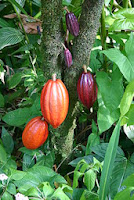
There were fears of business collapse, employee redundancy and high unemployment – mining firms took steps to downsize in order to contain the rising cost of production.

Hundreds of mineworkers have lost their jobs in 2013.

Yet, the some foreign investors, including the Australian Trade Commission, saw Ghana as a destination of choice for many of its companies, identifying investments in natural resources, agribusiness and education as the main opportunity areas for investors.

2013 was also rife with the debate of growing and eating genetically modified crops in Ghana. But at year end, scientists at the Crops Research Institute of the CSIR harvested seeds of the first-ever GM crop to be planted in Ghana – the Nitrogen Use Efficient (NUE) rice.

The trails were conducting on confined fields in the Ashanti region.

Interest groups in Ghana’s cocoa production also explored climate smart agricultural practices for farmers to mitigate and cope with the impact of climate change on production.

Going into 2014, interest groups would be watchful for government’s programs to address the rising budget deficit.

Already, the Public Utilities Regulatory Commission (PURC) has hinted of an increase in electricity and water tariffs from January 1, as the Automatic Adjustment Formula (AAF) for review of tariffs kicks in.

Businesses and other economic actors will keenly observe how the 2014 Budget will lead to a productive and prosperous New Year 2014.

Review by Kofi Adu Domfeh 

Monday, December 23, 2013

Ghana’s emerging billion dollar bamboo industry

Ghana can generate a billion dollar revenue annually from the export of value added bamboo and rattan products, according to projections.

The economic value of the product is not yet significant but this could be leveraged if the industry is properly developed.

In this special report, Kofi Adu Domfeh, examines how bamboo development can help Ghana address problems of climate change, poverty, rural-urban migration and high youth unemployment.

Find audio report…

Prestige Capital records almost 8,000 percent in funds mobilization

Prestige Capital Limited, a funds management and investment advisory company, has recorded close to 8,000 percent increase in funds mobilization, barely a year into operations.

The company’s funds under management of Gh₵500,000, at take off period in December 2012, have grown in excess of Gh₵40million.

Chief Executive Officer, Prince Kweku Acheampong, describes the performance within the period as good, though experienced low deposits in the month of September.

“The funds management industry is an alternative to financing institution to the banks because there are certain transactions that the banks don’t undertake. Basically we deal with the corporate [institutions] and our financing is long term,” he noted.

Prestige Capital is the third investment advisory firm to be headquartered in Kumasi. An additional branch will be opened in February 2014.

“Our strategic plan is to have a bank subsidiary,” Mr. Acheampong told Luv Biz Report, projecting the target should be achieved in its 8th year of operations.

“We’ll continue doing funds management and investment advisory but then we’ll evolve and have a subsidiary which will take care of our banking needs and the banking needs of people in the areas that we operate,” he said.

Story by Kofi Adu Domfeh

Friday, December 20, 2013

Researchers successfully grow “seed yams in the air”

Researchers at the International Institute of Tropical Agriculture (IITA) have successfully grown seed yams in the air using aeroponics technology, raising hopes and more options for the propagation of virus- and disease-free planting materials.

In preliminary trials, Dr Norbert Maroya, Project Manager for the Yam Improvement for Incomes and Food Security in West Africa (YIIFSWA) project at IITA, together with a team of scientists successfully propagated yam by directly planting vine cuttings in Aeroponics System (AS) boxes to produce mini-tubers in the air.

Aeroponics System is the process of growing plants in an air or mist environment without the use of soil or an aggregate medium. The technology is widely used by commercial potato seed producers in eastern and southern Africa but successfully growing yam on aeroponics is a novelty for rapidly multiplying the much needed clean seed yam tubers in large quantities.

“With this approach we are optimistic that farmers will begin to have clean seed yams for better harvest,” Dr Maroya said.

Preliminary results showed that vine rooting in Aeroponics System had at least 95% success rate compared to vine rooting in carbonized rice husk with a maximum rate of 70%. Rooting time was much shorter in aeroponics.

Aeroponics is coming at an opportune time for African farmers. Traditionally, seed yam production is expensive and inefficient. Farmers save about 25 to 30% of their harvest for planting the same area in the following season, meaning less money in their pockets.

Moreover, these saved seeds are often infested with pathogens that significantly reduce farmers’ yield year after year.

However with an established Aeroponics System for seed yam propagation at the premises of an interested private investor, seed company or humanitarian nongovernmental organization; yam producers can have access to clean seed yams.

The soilless yam propagation system will increase the productivity of seed and ware yam and effectively reduce diseases and pests incidence and severity (no soilborne or vector-transmitted pests and diseases during the vegetative phase).

Dr Robert Asiedu, IITA Director for Western Africa described the results as “impressive.”

“Yam is an important crop in Africa and addressing the seeds’ constraint will go a long way in improving the livelihoods of farmers who depend on the crop for their livelihood,” he added.

In conducting the aeroponics trial, a special structure was built in an existing screen house with Dixon shelf frames using perforated styrofoam box, as support for plant vines, while the developing roots of the plants in the air were enclosed in conditions of total darkness to simulate the situation of soil to the roots.


For the plant and tuber to develop, an automated power house system was established for atomizing periodically nutrient enriched water solution in the form of mist to feed the plants.

Thursday, December 19, 2013

Noble Dream evolves into Savings and Loans operations in 2014

Noble Dream Microfinance Limited has concluded arrangements to evolve the company into savings and loans operations by the first quarter of 2014.

Chief Executive Officer, Ezekiel Owusu Afriyie, says the decision is in line with the company’s ten year progression plan to attain universal banking status.

“We’ve been able to provide all the necessary requirements as far as Bank of Ghana requirement is actually concerned; the certificate is actually awarded, we can’t actually earn it so it’s in the hand of the Bank of Ghana to ensure that they push us there and for us we are ready for that,” he stated.

Noble Dream has opened 26 branches across the country within four years of operations, steering as the fastest growing in Ghana’s microfinance business.

The firm has, within period, employed more than one thousand and advanced Gh₵48 million in loans to over five thousand clients.

Mr. Owusu Afriyie tells Luv Biz the company’s focus is to grow along with its 500,000 customers.

“When you move up there then you can do a bigger business; we’ve been able to grow the capacity of our customers to a certain level and we should be able to take them up. For that matter, we want to move to the savings and loans to be able to build up and try as much as possible to grow along with these customers,” he said.

Mr. Owusu Afriyie says the company will also branch into insurance and other financial services of benefit to its customers.

Noble Dream is headquartered in the Ashanti regional capital, Kumasi.


Story by Kofi Adu Domfeh

Wednesday, December 18, 2013

Ghana joins forces with world’s largest partnership to stop frog extinction

SAVE THE FROGS! Ghana has formed an alliance with the world’s largest partnership for amphibian conservation, US-based Amphibian Survival Alliance (ASA) to prevent the extinction of frogs.

With the new alliance, SAVE THE FROGS! Ghana is now well positioned to launch into a continual massive campaign and conservation programmes to reverse Ghana’s environmental issues that threaten the survival of the country’s frogs.

Ghana’s frogs have been rapidly disappearing to a point that now one out of three are in danger of extinction. The frogs are threatened by habitat destruction through farming, mining and logging, the use of lethal chemicals such as Atrazine and over harvesting for consumption.

Gilbert Adum, Executive Director of SAVE THE FROGS! Ghana says that “the situation is made worse as there is a general lack of interest in frog conservation among the general Ghanaian public”.  

He adds that as a result “we are now losing time in saving the frogs but we are sure our partnership with ASA can turn back the hands of time.”

ASA’s Communications Director, Candace Hansen says “it is fantastic to have SAVE THE FROGS! Ghana on board! We know about their work and through this partnership, we will support them to achieve even more.”

SAVE THE FROGS! Ghana is calling for collaboration with Ghanaian organizations and individuals to help save Ghana’s frogs.

Network advocates creative content in basic education curriculum

The Sharper Generation Network (SGN), a personal development organization, has launched the Ghana Imaginative Creative Thinking (Ghana-iCT) project with the objective of mentoring and empowering basic school pupils with critical thinking tools.

The Network has also introduced basic school motivational series on Inventions and Good Habits to mentor and empower pupils at the basic level of education with critical tools for building the next generation of thinkers.

“At the end of the day, education should lay a foundation to be able to invent solution for societal problems,” stated Nyaaba-Aweeba Azongo, Country Director of the Network.

According to him, “a morally corrupt intellectual is worse to a country’s development than a first-class illiterate,” hence the need to build creative minds with good moral habits.

Deputy Minister of Youth & Sports, Joseph Yammin, who launched the initiative, is advocating Ghana’s Ministry of Education considers a review of basic educational curricula to reflect the current global trend which focuses on building a creative content to inspire inventions.

He notes that the basic education level constitutes the formative age to foster creative imaginative attitudes as the benchmark of educational success.

“Ghana have achieved a quantum jump in literacy rates since independence yet we all attest to the reality that we were better solvers of our problems in the Nkrumah era, when the rate of literacy was nothing to write home about, than now,” he argued.

This, he says, shows that the creative thinking content of education and societal literacy matters go beyond the ideologies of ‘Oxford’ literacy and numeracy where degrees and certificates appears to have more value than deeds and creative imagination.


Story by Kofi Adu Domfeh 

New aircraft landing navigation system for Kumasi Airport

A new aircraft navigation system is being installed at the Kumasi Airport to curtail incidents of flight delays and cancellations due to poor weather conditions.

The €750,000 Instrument Landing System (ILS) will aid pilots for smooth landing. The ILS consist three components – localizer, glide path and distance measuring equipment – which transmit signals for aircrafts to pick.

According to the Ghana Civil Aviation Authority (GCAA), the System is to preserve the safety of aircrafts and passengers, whilst positioning the facility for future increase in air traffic.

It is also part of the GCAA’s drive to upgrade the Kumasi Airport to international standards.

Barnaby Matteer, Acting Deputy Director of Engineering at the Authority, says the system installation is 80 percent complete.

“The main purpose of this equipment is to guide aircrafts in their finals when they are coming in to land; to get them to the centre line of the runway, even in very bad weather conditions,” he explained.

German firm, Thalis Air Systems, is undertaking the project.

The company’s Commercial Engineer, Lubomir Haviar, is confident the instrument should become operational by February 2014 after flight calibration.

The Kumasi Airport is presently carrying 40,000 passengers per month.


Story by Kofi Adu Domfeh

Translate

Popular Posts