...This Agenda is a plan of action for people, planet and prosperity... We are resolved to free the human race from the tyranny of poverty and want and to heal and secure our planet…

Search This Blog

Tuesday, September 4, 2018

Ghana’s Rocky Dawuni rocks the environment as UN Goodwill Ambassador

Rocky Dawuni, Ghanaian afro-roots artist and environmental activist, has been designated a UN Goodwill Ambassador for the African region to help drive the messages and goals of the UN Environment.

The Grammy-nominated singer and songwriter performed at an electrifying concert to end the 2018 Global Landscapes Forum (GLF) at the UN Environment, Nairobi, Kenya, which highlighted opportunities for landscape restoration in Africa through community engagement.

Rocky has been lending his voice to amplify issues of poverty, environmental degradation, water and sanitation issues and women's rights.

He is passionate about the environment and loves to inspire others to appreciate the importance of caring for the earth.

“I believe in music activism,” he told 3news.com. “Protecting the land is important to me because that is what gives us sustenance…People should step up their responsibility to protect, preserve and sustain the environment”.

As a Regional UN Goodwill Ambassador, Rocky is uniquely positioned to generate considerable support and publicity amongst his audience for UN Environment’s goals through engaging, organizing, and leading activities specifically targeted to his audience.

“Dawuni’s eloquence, cultural diplomacy and successful melding of music and activism have led him to become a passionate spokesperson for various global causes” said Erik Solheim, Executive Director of UN Environment. “We are delighted to share the stage with another Goodwill Ambassador, Suzanna Awiyo, who, like Rocky, is a passionate humanitarian and environmentalist”.

United Nations Goodwill Ambassadors volunteer their time, talent and passion to raise awareness of UN efforts to improve the lives of billions of people everywhere.

“There is so much positive energy in Africa and many opportunities to protect and restore the environment across the continent,” said Rocky. “And music is a powerful force that brings people together and inspires action. I want to work with communities and help them share their successes and encourage them to keep moving forward to make the future brighter for generations to come.”

He has a mission to create the space for a movement of artistes and other stakeholders to advocate for the environment.

“I want to start finding the musicians around the continent who are passionate about the environment and even those who are not passionate to understand their responsibility of leveraging their platform to help achieve the goal of planting 100million trees by 2030,” said Rocky.

Rocky’s infectious grooves and dance-inducing anthems have consistently excited fans across the globe. A galvanizing performer, Dawuni has shared the stage with Stevie Wonder, Peter Gabriel, Bono, Jason Mraz, Janelle Monae and John Legend, among many others. Named one of Africa’s Top 10 global stars by CNN, he has showcased his talent at prestigious venues such as The Kennedy Center in Washington, D.C. and The Hollywood Bowl in Los Angeles.

Rocky Dawuni joins an illustrious line-up of UN Environment Goodwill Ambassadors including Don Cheadle, Gisele Bundchen and Ellie Goulding.
By Kofi Adu Domfeh

Monday, September 3, 2018

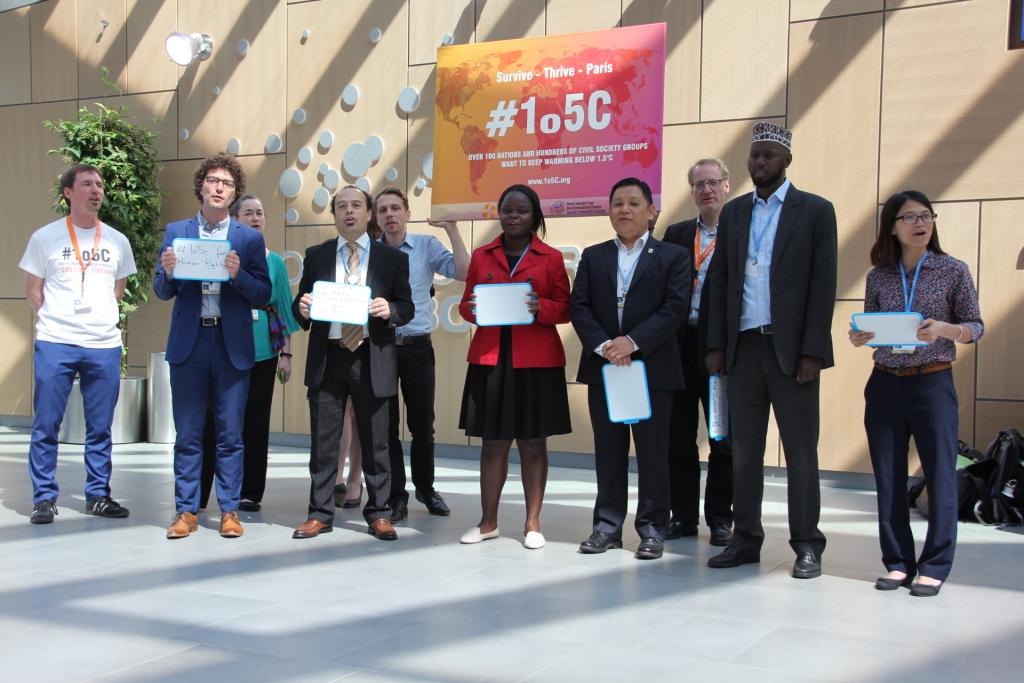
Could Bangkok climate talks unlock the ‘Paris Rulebook’ stalemate?

As the last round of climate change negotiations start in Bangkok, Thailand, ACT Alliance joins other climate justice movements to call for significant progress in the development of the rulebook to guide the implementation of the Paris Agreement.

“Major decisions on the implementation of the Paris agreement will be made at COP24 in Poland later this year, and this will depend on how much progress is made in the Bangkok negotiations. We want to see significant steps forward in all the negotiations to enable governments to make the necessary decisions when they meet at COP24,” says Rudelmar Bueno de Faria, ACT Alliance General Secretary.

The rulebook, which elaborates the modalities, procedures and guidelines for the implementation of the Paris Agreement, is extremely important because it determines how and whether the agreement can be implemented in a manner that is ambitious and equitable or not.

“The goals of the Paris Agreement to limit global warming by 1.5 degrees, to build global resilience to the impacts of climate change and to provide financial resources to support the efforts of developing countries to respond to climate change can only be achieved if the rulebook reflects the necessary transparency, accountability, and ambition  and deliver climate justice that respects human rights and contributes to sustainable development,” says Martin Vogel, Chair of the ACT Alliance climate change group.

As an official observer to the UNFCCC, ACT Alliance has sent a delegation of policy experts to engage with the Bangkok negotiations and to support the efforts of most vulnerable developing countries while holding government accountable to the decisions they made in Paris in 2015.

Thursday, August 23, 2018

Climate-smart yam cropping system for sustainable production


At age 55, Beatrice Asantewaa has been actively farming yam, cassava, cocoyam, maize, plantain and groundnuts for over 20 years.
 
She is fulfilled at tilling the soil to produce food to feed her family and also earns good income to manage her other economic needs.

“I get enough produce to cater for my family and sell others to get money for other things,” she said.

Her major challenge, perhaps, is access to market to ease the disposal of her harvests.

In the future, however, Beatrice will face a bigger challenge of accessing fertile land to grow her crops, as opportunities to allow lands to fallow dwindle.

“Virgin lands are no longer available because of climate change, charcoal burning and indiscriminate tree felling,” noted Henry Azot, a Chief Technical Officer at the Ministry of Food and Agriculture (MOFA).

He says critical interventions will be needed to address the challenge of declining soil fertility and scarcity of virgin lands for use in yam cultivation.

Research scientists are exploring solutions to help farmers overcome this challenge by introducing farmers to the Pigeon Pea–Yam Cropping System for improved yam productivity.

The new planting system, implemented by the Crops Research Institute (CRI) of the Council for Scientific and Industrial Research (CSIR) and partners, has been identified as sustainable for yam production in the face of depleting soils and climate change.

Research scientist on the project, Eric Owusu Danquah, says the technology also address staking which is crucial in yam production.

“This is very important as it sustains the soil nutrient. It also helps in climate change because farmers don’t clear places on yearly basis; they stay on a particular place continuously for a longer period. We are saving the farmers from cutting down trees to use as stake which also help in carbon sequestration,” he explained.

The pigeon pea is used as allays with the yams planted in-between the ridges. The system also involves placing the pigeon pea at the border zone which are cut and used at stakes – the direct access to stakes saves the farmers from the labour, transportation and cost of buying stakes.

The pigeon pea conserves moisture and fixes atmospheric nitrogen. Its leaves or biomass, which are cut and spread before land preparation, also add to the soil carbon and nutrient stock in sustaining soil fertility.

By 2020, the researchers are hoping to come out with a technology that will be appreciated by farmers.

Opanyin Adu is among yam farmers from the Ashanti and Brong Ahafo regions targeted for the on-station field trials of the new cropping system at Aframso in the Ejura-Sekyeredumase District of the Ashanti region.

He has been farming the past 30 years, long enough to appreciate the dwindling soil nutrition.

Without the application of fertilizer, Opanyin Adu used to harvest good yields from his yam farm though he planted in mounds.

“Now the land has lost its potency, so you need to apply fertilizer if you are to attain good yield,” he observed.

Opanyin is now looking forward to the outcome of the Pigeon pea–yam cropping system as a productive alternative to his conventional planting method.

“We like the growth of the yam and believe it will be beneficial for us to listen to the researchers. I will like to experiment the new system by farming alongside my conventional system to appreciate the difference,” he said.

Story by Kofi Adu Domfeh

Friday, August 17, 2018

Will Ghana’s Cocoa Industry Survive the Climate Onslaught?

Cocoa, the second largest foreign exchange earner for Ghana, is indeed the cash-cow of the Ghanaian economy.

But the cocoa industry, a major driver to deforestation, is reeling under the threat of climate change.

Increasing production demands expansion of area under cultivation, with the resultant effect of converting forests to farming systems which leads to decline in carbon stocks.

To sustain production, there is the call for the country to explore climate-smart cocoa production practices.

Kofi Adu Domfeh takes a look at what Ghana is doing to ensure the cocoa economy and local livelihoods are sustained.

The Paradox of Cocoa Production

A drive through Ghana’s cocoa belts, especially during the dry season, reveals a sorry sight of stretches of cocoa withering from the top as though fire had gone through the top part of farms.

Under good weather and improved farming practices, Ghana unprecedentedly produced one million metric tons of cocoa in the 2010/2011 crop year.

But production has since declined, currently hovering around 850,000 tons.

Temperature plays a critical role in Ghana’s cocoa production – whiles climate change affects agriculture, agriculture also affects climate change.

Agroforestry research scientist, Dr. Luke Anglaaere, describes cocoa production as a paradox to Ghana’s forest depletion and restoration.

“Cocoa is the crop that has led to the destruction of Ghana’s forest and it is the only crop within Ghana’s agricultural system that has the potential to help restore the forest, to bring back the forest,” he said.

The Climate Threat to the Prized Bean

Enjoyed by sweet-toothed consumers the world-over, more than half of the world’s chocolate comes from the cocoa plantations of Ghana and Côte d’Ivoire, where hundreds of thousands of smallholder farmers supply lucrative fair-trade markets in developed countries.

But the climate threat could transform the cherished chocolate bar into a luxury few can afford.

Ghana, at the turn of the century, had 8.2million hectors of forest reserves.

The policy in forest reservation at the time was to reserve a small portion to create a good micro-climate to support cocoa production and other agricultural activities.

“The reduction in forest, alarming though it may seem, was more or less intentional,” noted Kwabena Nketia of Tropenbos International Ghana. “But with time government realized that was not the best of policies; that is allowing the areas outside the reserves to be converted fully to agriculture”.

Most ecological zones in Ghana are experiencing gradual increase in temperature, longer dry season and reduction of annual rainfall.

Mr. Nketia has observed the dwindling fortunes of cocoa production in some northern parts of the country “because the microclimate there does not support cocoa growing; so if we are not careful with the way we manage our forest resources, as we lose our forest, the environment gets drier and drier and cocoa will no longer be able to survive”.

Seven years ago, climate scientists at the Colombia-based International Centre for Tropical Agriculture, CIAT, predicted that the expected increasing temperatures will lead to massive declines in cocoa production in Ghana and other cocoa-growing areas in West Africa by 2030.

Their report also revealed that an expected annual temperature rise of more than two degrees Celsius by 2050 will leave the cocoa-producing areas too hot for chocolate.

Warmer conditions mean the heat-sensitive cocoa trees will struggle to get enough water during the growing season, curtailing the development of cocoa pods, containing the prized cocoa bean.

Fatal Cocoa Extension Error

With the exception of the Greater Accra region, cocoa used to be cultivated in all areas of Southern Ghana.

Farmers will clear the forests in these areas to plant their cocoa due to the soil fertility of forest lands.

Initially, some remnant trees were left to provide shade.

With the introduction of hybrid cocoa, however, farmers were advised to remove trees to engender higher yields from the hybrid.

Cocoa extension officers erred in discouraging the cultivation of hybrid cocoa under shade, said Dr. Anglaaere of the Forestry Research Institute of Ghana (FORIG) of the Council for Scientific and Industrial Research (CSIR).

As an open-sun cocoa, the hybrid cocoa yields higher than when under shade. However, the variety draws heavily on soil nutrients through the export of the beans from the system.

“Within a short time, the nutrient pool within the soil gets depleted very fast and yields begin to decline,” observed Dr. Anglaaere.

Nutrient loss and sun scorch, he said, are major challenges to sustainability. With climate change, temperatures are high and the cocoa trees struggle in the heat and limited nutrients in the soil.

The open-sun system practice, therefore, requires external inputs of fertilizers and agrochemicals for the crop to journey beyond the 15-25 year life-span.

“Our cocoa is not growing healthily and yields are also beginning to suffer. So, invariably, we have to, at any cost, try to bring back shades into that system because the hybrid also does well under shade,” said the researcher.

Now, the government’s policy looks at the possibility of managing areas outside the permanent reserves on sustainable basis, including the promotion of agro-forestry and tree planting.

Farmers are now encouraged to integrate trees in their cocoa production.

Promoting a More Beneficial Shade-Loving System

Ghana has lost half of its forests since 2000, and the rate of loss is two percent per year.

Head of the World Bank’s Climate Investment Fund (CIF), Mafalda Duarte, during a recent visit to Ghana, reiterated the country’s risk of losing its total forest cover if the trend of forest loss continued unchecked.

The CIF has over the past decade invested $75.7 million in Ghana’s reforestation program, implemented by the Forestry Commission and the Ghana Cocoa Board (COCOBOD) to help reverse forest degradation in reserves and off-reserves.

The Fund’s intervention is driving a paradigm shift in cocoa production from a “sun loving system” to a more beneficial “shade-loving system” for better yields, better soil, better preserved water streams and biodiversity.

“We ask the farmers to combine the cocoa trees with timber trees, high yielding economic trees. Once you have the timber trees on the farm, they will be providing a lot of shade because cocoa is a forest plant and it thrives best when it exists with other trees,” said COCOBOD Chief Executive, Joseph Boahen Aidoo.

Partnerships for Sustainable Cocoa Production

Among challenges affecting productivity levels of cocoa in West Africa are over-aged and diseased farms.

The world’s top cocoa producer, Cote d’Ivoire, which supplies two million tons of cocoa to the world market annually, is joining forces with Ghana to sustainably grow the bean.

The two leading cocoa economies are accessing a $1.2 billion investment facility from the African Development Bank (AfDB) to rehabilitate cocoa farms and replace forests that were razed to grow cocoa beans.

In Ghana, about 10,000 hectares of diseased cocoa trees will be cut down across the country from August 2018 as the COCOBOD kick-starts series of interventions to increase cocoa yields.

“We are also embarking on irrigation because of the climate effect…to help the farmers harvest all year round,” said Joseph Boahen Aidoo.

The drive to promote sustainable climate-smart cocoa production has been supported by not-for-profit and non-governmental organizations.

SNV Ghana, for instance, has over the years partnered the COCOBOD, the Forestry Commission and some private licensed cocoa buying companies to expose farmers to interventions in climate mitigation and adaptation for sustainable cocoa production.

“Indeed, the negative impact of climate change has become real in virtually all cocoa growing areas across the country and the results are decreasing productivity per unit size of farm,” said Charles Brefo-Nimo of SNV Ghana.

Under the SNV’s Shaded Cocoa Agroforestry Systems (SCAFS), farmers are supplied with tree seedlings to encourage afforestation for improved productivity.

“I received 1,111 cocoa hybrid seedlings, 1,111 pieces of plantain suckers and 30 pieces of economic trees for free, and this means that I have saved a lot of money to make other financial commitments,” said Yaa Ampomah, 60 year old farmer at Essam in the Bia West District of the Western region.

Putting Farmers First to Drive Smart Production

Prior to SNV’s intervention to introduce the farmers to new cocoa farm establishment model, they used to rehabilitate their unproductive farms by using cocoa beans from the disease susceptible Amazon cocoa pod without any planting design.

“Today, we are provided with technical agronomy and extensions support to do lining and pegging as well as using shade system in our farms,” said Christian Nkrumah, a 34 year old farmer from Asuopri Community.

FORIG’s Dr. Anglaaere expects that cocoa farmers would be trained and empowered to plant 15-30 trees on an acre of cocoa farm, more than the 6-7 trees recommended by the Cocoa Research Institute of Ghana (CRIG).

“It is just how you manage the trees that determine the level of impact that they have on the cocoa,” he said. “The type of tree species and management of the trees are important for climate smart production”.

He explained that cocoa and coffee are more shade-tolerant than other agricultural products. Therefore, the number of trees that can be put under food crops is not comparable to the number of trees that the cocoa crop can tolerate.

COCOBOD says it is implementing innovations to improve crop yield in order to boost the country’s cocoa production to one million metric tons ahead of a five-year target.

But Charles Brefo-Nimo of SNV Ghana, says the future for sustainable cocoa production in Ghana requires a multi-facet approach which should be grounded on strong public and private sector funding.

“Cocoa renovation and rehabilitation with agro-forestry system model is a critical climate change adaptation model but other innovative models such as appropriate cost effective and affordable irrigation scheme should be introduced at smallholder levels,” he said.

Wednesday, August 1, 2018

Global experts meet in Nairobi to advance landscape restoration in Africa

Finding solutions to meet the challenge of landscape restoration in Africa, where almost 50 million hectares of land is degraded each year, is a complex challenge requiring an innovative, coordinated, international response, says a top forestry expert who will speak at an upcoming conference in Nairobi.

Over 800 multi-sector stakeholders from across Africa and around the world will meet in Nairobi, along with at least 30,000 people online, at the Prospects and Opportunities for Restoration in Africa Global Landscapes Forum (GLF) at UN Environment headquarters in Nairobi later in August.

“Africa’s landscape must be restored to ensure the natural resource needs of the continent’s rapidly expanding population will one day be met, but there is no silver bullet,” cautioned Robert Nasi, director general of the Center for International Forestry Research (CIFOR), co-coordinator of GLF with UN Environment and the World Bank.

The event will highlight many current landscape restoration initiatives and help set the stage for many more, demonstrating how countries are building on political will through actions on the ground to tackle land degradation.

Although annually Africa loses about 2.8 million hectares of forest, an area roughly the size of Saudi Arabia, the continent shows immense potential for landscape restoration. In total, two thirds of the continent’s land mass is degraded, according to World Resources Institute.

“Africa’s population growth protections are one key aspect of the challenge,” said Erik Solheim, executive director of UN Environment, who will speak at the Nairobi event. “Another is that many parts of the world will be looking to Africa for food production. The key challenge is therefore how do you provide for job creation and increased food production, and protect the environment? The answer is of course proper land-use planning.”

Local communities have restored more than 5 million ha of degraded landscapes across the continent, while more than 20 nations have pledged to restore 100 million ha of forest by 2030 through the African Forest Landscape Restoration Initiative (AFR100).

At GLF Nairobi 2018, delegates representing governments, international and grassroots organizations, the financial and private sector, indigenous communities and youth will draw upon these initiatives to pave the way forward in making forest and landscape restoration a reality.

Dialogues will take the shape of discussion forums, plenaries, online webinars and Landscape Talks, similar to TED Talks, while exciting side events, exhibitions and scientific report launches will celebrate Africa’s work in restoration and inspire action across sectors.

The event offers invaluable opportunities for stories and interviews related to restoration and environmental concerns. In addition to Nasi and Solheim, other key speakers include: Wanjira Mathai, chair of the Green Belt Movement; Hindou Ibrahim, National Geographic explorer and advocate for indigenous knowledge and rights; officials from environmental and forestry ministries across Africa, the World Wide Fund for Nature (WWF), the Rainforest Alliance and many more.

Friday, July 6, 2018

Pope Francis, environmental leaders forge vision for global action


Environmental leaders, activists and advocates gathered here today with Pope Francis to kick off a two-day Vatican-organized conference with a sense of urgency and unity. Together they hope to emerge with a momentum for greater action and a shared vision for protecting our planet.

Inspired by the third anniversary of the Pope’s seminal encyclical on the issue – titled ‘Laudato si’–  political and religious leaders, scientists, economists and heads of civil society organizations came together to discuss how to awaken people to the gravity of the situation and inspire a “massive movement” of cooperative action and moral responsibility to our planet.

UN Environment’s Executive Director, Erik Solheim will address the convocation on the second day of these meetings titled ‘Acting Together to Save our Common Home’.

“The challenges we face around climate change, biodiversity loss and deforestation are daunting. The science – as so ably outlined in Laudato si’ – is unambiguous,” Erik Solheim wrote in his remarks for the conference. “We are reaching, surpassing and ignoring global environmental tipping points that are causing enormous problems for humanity and hitting the poorest and most vulnerable the hardest.”

Having drawn inspiration from the call for unity and action in the encyclical, UN Environment introduced their Interfaith Rainforest Initiative at the conference. The new international alliance is a platform for religious leaders and faith-based communities to work hand-in-hand with indigenous peoples, governments, civil society and businesses on actions that protect rainforests.

“This is just one example of how new kinds of collaboration across sectors can bring forth real solutions,” said Solheim.

In Laudato si’, Pope Francis, who has emerged as an avid advocate for the environment since his appointment, condemned the collective negligence on behalf of the planet and called for strong and immediate action on climate change.

“Young people demand change,” the encyclical letter reads.” They wonder how anyone can claim to be building a better future without thinking of the environmental crisis and the sufferings of the excluded.”

Since taking up his post, the Pope has repeatedly called to bridge the divide between communities in protection of our commonly inherited earth, lobbying with political leaders and private sector chiefs alike to urge the need for acting together to save the earth.

The international conference, organized by the Vatican Dicastery for Promoting Integral Human Development, highlighted the personal accounts of victims of environmental crises, reflecting on how to understand and respond to these crises and envisage the journey ahead for a sustainable world.

The event will set the stage for a series of important dialogues on the subject to follow,
the including the Global Climate Action Summit in California, the annual International Monetary Fund-World Bank meeting in Bali, and the COP 24 climate summit in Katowice, Poland.
 

Friday, June 22, 2018

Open burning of contraband goods in Ghana environmentally condemned

Hundreds of illegally imported mattresses confiscated by Ghana’s customs authority were recently burnt openly at a landfill site.

The destruction of the impounded goods is in line with laws prohibiting the entry of used mattresses into the country.

It is common place to see thousands of cartons of cigarette, canned food, drugs, wax prints and other restricted or unwholesome goods burnt openly.

Environmental concerns have however been raised about the practice of burning such materials, due to the gases emitted into the atmosphere.

Kwaku Abeeku, who manages Green Energy and Logistics Consults, says Ghana as a signatory to various international agreements on climate change, including the Paris Agreement, must reconsider alternatives to the burning of impounded goods as soon as possible.

“In the case of these open burns, aside the issue of Carbon Monoxide, these imported mattresses are mainly synthetic foams containing petroleum based chemicals and sometimes even fire retardants,” he observed. “Aside emissions, people living in the immediate environments of these burn sites and the country at large are put in a rather bad situation as we commit to global moves in combating climate change”.

Ghana, in its international obligations as a Party to the United Nations Framework Convention on Climate Change (UNFCCC), is guided by its own commitments in the nationally determined contribution (NDC) to climate change mitigation.

As an obligation at the multilateral level, Ghana reaffirms its resolve to support global efforts to define a common future that seeks to safeguard the collective interest of all nations by supporting the 2015 Paris global agreement on climate change.

The implementation of climate actions is expected to help attain low carbon climate resilience through effective adaptation and greenhouse gas (GHG) emission reduction.

In 2017, Ghana at the UN Conference of Parties (COP23) in Bonn, Germany, pledged the country’s commitment to help combat climate change and adapt to its effects.
The destruction of contraband mattresses, clothing, food and pharmaceutical products through open burning is therefore regarded as negating the country’s commitment to climate mitigation.

Kwaku Abeeku has challenged the Ministry of Environment, Science, Technology and Innovation (MESTI), the Environmental Protection Agency (EPA), the Food and Drugs Authority (FDA) and other institutions responsible for best environmental practices to help halt the open burning of materials.

“I believe the time to make climate and environmental concern a culture and environmental responsiveness a mandatorily measured policy is now,” he said.

By Kofi Adu Domfeh

Thursday, June 21, 2018

Climate Action Network wants countries to step up their climate ambition

The Climate Action Network (CAN) has welcomed the declaration by 23 nations to step up climate ambition.

The declaration, issued on the sidelines of a week of ministerial meetings on climate change underscores the urgency for countries to enhance their Nationally Determined Contributions (NDCs) by 2020 in line with the Paris Agreement; put in place the necessary long-term strategies to reach net zero emissions; and secure the support and investment to ensure effective implementation.  

Countries now need to walk the talk. The International Panel on Climate Change (IPCC) Special Report on 1.5C due to be released in October is likely to confirm that limiting warming to 1.5C is feasible, but hard to achieve.

This makes it essential and urgent for all countries to join these front-runners and step up to enhance their NDCs by 2020. The process requires adequate finance to flow to countries that need it to establish the necessary infrastructure for a green and carbon-free economy.

“It is great to see these 23 governments joining the global call to step up climate action. The transition to 100% renewable energy is an economic opportunity for growth and job creation,” said Wael Hmaidan, CAN Executive Director. “Now, we need to see if the remaining countries are able to step up their climate ambition and enhance their targets as well by the next climate talks in Poland.”

Signatories to the declaration include Argentina, Britain, Canada, Chile, Colombia, Costa Rica, Denmark, Ethiopia, Fiji, Finland, France, Germany, Maldives, Marshall Islands, Mexico, Monaco, the Netherlands, New Zealand, Norway, Rwanda, Saint Lucia, Spain and Sweden.

Positive signals also came from the EU Commission, which announced it would be in a position to increase ambition.

However, around 200 nations collectively made a promise to their citizens in 2015 as part of the Paris Agreement to ratchet up their commitments and targets every five years.

This declaration signals a step in the right direction, but many more countries should now similarly indicate they will fully implement the Paris Agreement and enhance their NDCs by 2020.

These initiatives are important to drive both strong momentum for a positive conclusion of the Talanoa Dialogue and a strong outcome at the upcoming UN talks in Katowice, Poland. 2018 is a very important year to trigger the process of NDC revision by all countries.

The political phase of the Talanoa Dialogue needs to result in a strong and universal decision as the first stock-taking exercise of countries' efforts since Paris was agreed in 2015.

Indeed the 2019 United Nations Secretary-General Climate Summit is an important milestone but all countries need to commit as early as December 2018 at the UN talks to prepare the ground nationally for raised and updated NDCs by 2020.

The countdown has started and if countries start reviewing their NDCs right after COP24, that still only leaves one year to complete the process; that time is needed for multi-stakeholder engagement to build comprehensive and inclusive NDCs involving all actors of society. Governments will only succeed if people are on board.

“With the window of opportunity to keep global warming to 1.5°C fast closing, we also need others to act fast.  We need rapid and deep cuts to global gas emissions and, as state and non-state actors step up, we urge other countries to enhance and revise their NDCs by 2020,”said Fernanda Carvalho, Climate and Energy Policy Manager, WWF International.

Translate

Popular Posts