...This Agenda is a plan of action for people, planet and prosperity... We are resolved to free the human race from the tyranny of poverty and want and to heal and secure our planet…

Search This Blog

Monday, December 3, 2018

Join the UN campaign to promote Climate Action by the People

The United Nations is leading a new campaign enabling individuals the world over to unite in actions to battle climate change.

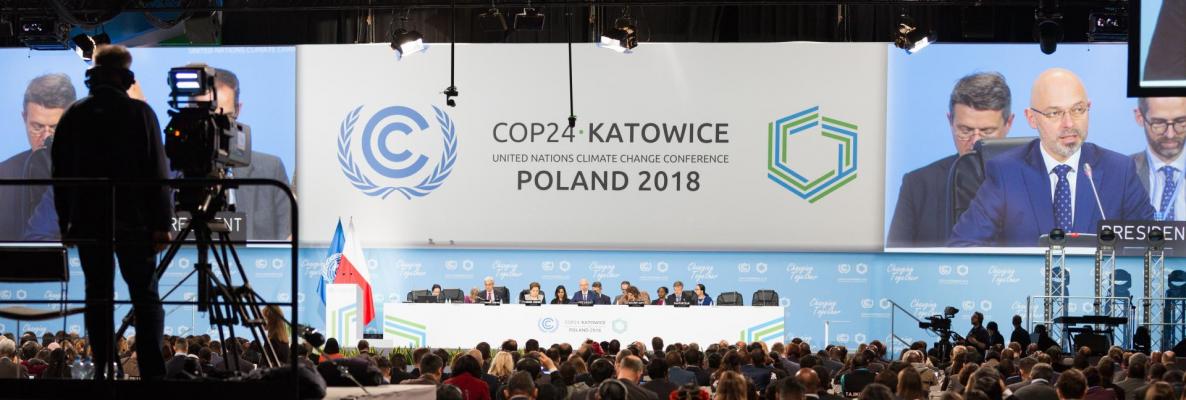
In an address to the opening session of United Nations Climate Change Conference (COP24) in Katowice, Poland, renowned broadcaster Sir David Attenborough urged everyone to use the UN’s new ActNow.bot, designed to give people the power and knowledge to take personal action against climate change directly on the Facebook Messenger Platform.

Speaking for “The People’s Seat” initiative, Sir David Attenborough called it the result of new activism shaped by people from around the world and collected through social media.

“In the last two weeks,” he said, “the world’s people have taken part in creating this address, answering polls, creating videos and voicing their opinions.”

“They want you – the decision makers – to act now,” the British broadcaster said, addressing the politicians and officials assembled for two weeks in this Polish mining town to negotiate next steps in monitoring and mitigating climate change.

“The people are behind you, supporting you in making tough decisions, but they are also willing to make sacrifices in their daily lives,” Attenborough said.  “To make this even easier, the UN is launching the Act Now bot. Helping people to discover simple everyday actions that they can take, because they recognise that they too must play their part.”

The innovative UN campaign was created with the support of Facebook and advertising company Grey and harnesses advances in artificial intelligence (AI) to engage people in the growing movement to take climate action.

The ActNow.bot is a fully interactive and responsive chat bot, located on the UN’s Facebook page that suggests everyday actions – determined by the user’s interaction with the bot – that can be taken to preserve the environment and logged on the platform to be shared with social media followers to persuade them to take action too. The collective actions will be presented during the Secretary-General’s Climate Summit in New York in September 2019.

UN Under-Secretary-General of Global Communications Alison Smale welcomed the launch.

“Rising global temperature, record levels of greenhouse emissions, and increasing impacts of climate change require urgent and measurable action on the part of everyone,’’ she said. “This new social media tool, a Facebook Messenger bot, will help people learn about activities to reduce their carbon footprint, and show—and share with friends - how they are making an impact. We all need to do things differently.”

The initiative comes as global decision makers are being asked to intensify efforts in the battle against climate change and to agree the implementation guidelines of the landmark 2015 Paris Agreement.

All this is evolving against a backdrop of conclusive new evidence by UN Environment which found countries to significantly step up the necessary actions to fulfil the commitments made in Paris.

The Climate Action Bot aims to highlight popular global commitment to reducing climate change, and to stand behind decision makers worldwide in taking actions to preserve our environment.


Rapid action urged as key UN Climate Change Conference opens

Following a year of devastating climate disasters around the globe, the annual UN Climate Change Conference (COP24) has opened in Katowice, Poland with the goal of finalising the implementation guidelines for the Paris Climate Change Agreement.   
 
The guidelines will provide clarity on how to implement the landmark agreement fairly and transparently for all. 

Specifically, they will strengthen international cooperation by ensuring that national contributions to the global effort are transparent, responsibility is shared fairly and progress on reducing emissions and building resilience can be accurately measured.

Patricia Espinosa, the UN’s Climate Chief, said: “This year is likely to be one of the four hottest years on record. Greenhouses gas concentrations in the atmosphere are at record levels and emissions continue to rise. Climate change impacts have never been worse. This reality is telling us that we need to do much more – COP24 needs to make that happen”.

A finalized set of implementation guidelines will unleash practical climate actions with respect to all the targets and goals of the Paris Agreement, including adapting to climate change impacts, reducing greenhouse gas emissions and providing financial and other support to developing countries. 

Six months after the 2015 Paris Summit, the negotiations on the implementation guidelines were launched and COP24 was set as the deadline. While governments are committed to finalizing the guidelines in order to unleash the full potential of the agreement, a great deal of work still remains to be completed in Katowice.

“The 2015 Paris Agreement entered into force faster than any other agreement of its kind. I now call on all countries to come together, to build upon this success and to make the agreement fully functional”, said in-coming COP President, Mr. Michal Kurtyka.

“We are ready to work with all nations to ensure that we leave Katowice with a full set of implementation guidelines and with the knowledge that we have served the world and its people,” he added.  

Ms. Espinosa noted that countries have strong backing for rapid climate action, given that public awareness and demand for solutions have increased due to clear evidence that our climate is changing.

“We simply cannot tell millions of people around the globe who are already suffering from the effects of climate change that we did not deliver”, she said.

Talanoa Dialogue

The conference is being held hot on the heels of the Global Warming of 1.5C report by the Intergovernmental Panel on Climate Change, as well as a cascade of UN and other reports on increasing greenhouse gas concentrations and emissions and on health and other serious impacts.

“All of these findings confirm the need to maintain the strongest commitment to the Paris Agreement’s aims of limiting global warming to well below 2ºC and pursuing efforts towards 1.5ºC”, Ms. Espinosa stressed.

“All our focus should be on reaching this aim and on building up ambition towards it”, she added.

COP24 will also conclude the year-long, Fiji-led Talanoa Dialogue, the first-ever international conversation of its kind to assess progress towards the goals of the Paris Agreement, including the goal of limiting global temperature increases.

One of the dialogue’s aims is to find practical and local solutions for how countries can increase their ambition in the next round of Nationally Determined Contributions (NDCs), which describe their individual efforts to reduce national emissions.

During the high-level event that will conclude the Talanoa Dialogue, Ministers will consider the IPCC’s 1.5ºC report and its relevance in the context of future actions.

“It is my hope that this will give Ministers the opportunity to provide a political signal for enhanced ambition”, Ms. Espinosa said.

COP highlights

Following a procedural opening on Sunday, 2 December, to enable work to begin quickly, Monday will be the grand opening ceremony graced by the presence of some 40 Heads of State and Heads of Government.

In a world-first, and supported by the in-coming Polish COP presidency, the UN has launched the “People’s Seat” initiative. During Monday’s opening ceremony, the initiative will open a new window for people to express their views through social media and digital technology.

It will also aim to engage people from all walks of life around the globe in the growing momentum to take climate action in their personal lives.

Climate action before 2020

At the COP, Ministers will have the opportunity to engage in several high-level events, which all highlight the key elements of current climate change efforts.

These high-level events will address some critical aspects of climate action before the year 2020, including:

  • The Pre-2020 Stocktake will assess climate actions to be taken before 2020.
  • The High-level Ministerial Dialogue on Climate Finance will consider the state of global climate finance flows as captured by the third Biennial Assessment.
  • The High-level Global Climate Action Event will offer a unique vision of how the world is affected by climate change and how different sectors are tackling the issue.
Together, all events provide Ministers with a space to have frank and open discussions on progress made to date.

Capacity-building for climate action, a critically important element for developing countries now and in the future, will receive a significant boost at COP24.

At a specially created capacity-building hub, some 35 events will cover topics such as implementing NDCs, integrating gender into climate action and utilizing the knowledge of indigenous peoples.

The Marrakech Partnership for Global Climate Action

The growing momentum for climate action by non-Party stakeholders such as cities, regions, businesses and investors will be showcased throughout the COP.
This momentum already represents USD 36 trillion in economic activity and is growing steadily.

Showcasing these events at the COP is leading to a new form of inclusive multilateralism that is vital to achieving the goals of the Paris Agreement.

Well over 100 events will highlight action in transport, water, land-use, energy, the fashion industry, to name a few, representing the spectrum of climate action. They will include CEOs, Mayors, Governors and other leaders from civil society at large.

Wednesday, November 28, 2018

Nations urged to accelerate efforts to wipe out hunger and malnutrition


With rising levels of global hunger putting the  goal of ending malnutrition in all its forms by 2030 in serious jeopardy, the Food and Agriculture Organization of the United Nations (FAO) and the International Food Policy Research Institute (IFPRI) have today launched a global conference aimed at urgently accelerating efforts to achieve Zero Hunger worldwide.

After decades of impressive reductions in the numbers of undernourished people, hunger is again on the march. According to the latest report published jointly by FAO and four other UN agencies, about 820 million people on the planet are malnourished.

“This is the third consecutive year that progress in ending hunger has stalled and now has actually increased (in 2015, 2016 and 2017).  Child stunting is a major problem and nearly two billion still suffer from hidden hunger or a deficiency of important nutrients. This also includes people who are overweight or obese,” said FAO Director-General José Graziano da Silva in a video message to the conference.

Pointing out that the number of hungry and malnourished people in the world has gone back up to levels last seen ten years ago, he added: “After decades of gains in fighting hunger, this is a serious setback and FAO and the UN sister agencies, together with member governments and other partners, are all very concerned.”

While there are big challenges in reaching Zero Hunger, FAO and IFPRI are stressing that the goal is still achievable.

But there is no time to waste.

“After many years of tremendous global progress in reducing hunger and malnutrition, it is painfully clear that our current pace is not sufficient to end hunger by 2030, but we can still achieve this goal,” said Shenggen Fan, IFPRI Director General. “Many countries – from China, to Ethiopia, to Bangladesh, to Brazil – have achieved remarkable reductions in hunger and malnutrition, and those successes hold important lessons for the places currently struggling to make significant progress.”

The conference, attracting delegates primarily from Africa and Asia is providing a platform to accelerate the sharing of existing specialty knowledge, approaches and tools that have led to success in many countries so others can learn, adapt and accelerate their own work to reduce hunger and malnutrition in sustainable ways.

Ending hunger and malnutrition by the numbers

While Africa continues to be the hungriest continent per capita, the Asia-Pacific region has the highest total number of undernourished – more than 500 million by FAO estimates.

The size of the global challenge means it must be addressed meaningfully and immediately. For example, the Asia-Pacific region is home to more than 60 percent of the world’s undernourished, and in order for it to achieve Zero Hunger by 2030 the countries of the region need to collectively lift more than 110 000 people out of hunger each and every day for the next 12 years.

The urgency of the task at hand cannot be overstated – and ending undernutrition is more complex than many realize. The rise in global hunger is witnessed alongside an increase in obesity, which brings with it an entirely different set of health and economic challenges for the world now and in the future.

Leveraging good public policy and knowledge to accelerate the arrival of Zero Hunger

The conference is highlighting how great strides have been made in many countries in reducing hunger and malnutrition, rapidly and sustainably, through improvements in public policies, focused investments and the harnessing of new technologies.

Bangladesh, for example, has achieved one of the fastest reductions in child underweight and stunting in history, largely by using innovative public policies to improve agriculture and nutrition. Policies supporting agricultural growth helped increase agricultural production, while other policies supported family planning, stronger health services, growing school attendance, greater access to drinking water and sanitation, and women’s empowerment. Together, these policies reinforced each other to create an environment of improved food security and nutrition for millions of Bangladeshis.

Economic growth in China lifted millions out of both hunger and poverty, while Brazil and Ethiopia transformed their food systems and diminished the threat of hunger through targeted investments in agricultural research and development (R&D) and social protection programmes. Starting in the mid-1980s and continuing over two decades, crop production in Brazil grew by 77 percent and that --  combined with the country’s Fome Zero programme, established in 2003 to provide beneficiaries a wide range of social services -- saw hunger and undernutrition nearly eradicated in just ten years.

Similarly, Ethiopia’s large-scale investments in agricultural have led to substantial growth in the production of cereals and the availability of food, while the creation of the Productive Safety Net Programme provides food and/or cash to needy households, which are direct for the most needy and conditional on a work requirement for others. These investments, combined with large public expenditures in health and education, have dramatically reduced hunger and undernutrition, shifting the international image of Ethiopia from victim of frequent famines to development success story.

Accelerating the roll out of technology and better food systems

Worldwide, improvements in technology are helping to deliver better nutrition. For example, boosting the nutritional value of staple foods through fortification or crops themselves through biofortification is helping reduce incidence of harmful health conditions like anemia and improve cognitive development in places as diverse as Zambia and India.

And approaches like precision farming, drip irrigation, conservation agriculture, and the introduction of staples that are resilient to droughts and floods all represent additional examples of powerful tools that can help us produce greater amounts of more nutritious foods in more sustainable ways.

The proliferation of new communications technologies, and ability to harness big data, also offer opportunities to scale up successes significantly to even greater impact.

But innovation extends far beyond apps, drones or farm machinery. Innovation in agriculture can involve using new social, organizational and institutional processes to support farmers and sustainably intensify production. These can range from building stronger producer self-help groups and extension services, to improving access to markets and credit in pioneering ways, to developing new ways of processing, storage, transport and marketing food. Innovation can be decidedly "low tech" – for example leaving stands of trees on farms intact to promote soil health and enhance agroecosystem productivity. Innovations in intervention design can boost their potential impact, like when behavior change communications that encourage the adoption of ideal nutrition and child feeding practices are integrated into social protection programmes to improve household nutrition as well as food consumption.

Marshalling political will, knowledge, and brainpower

By convening key figures from the worlds of research, policymaking, and development programme implementation to share knowledge of the policies, interventions, and technologies that have effectively accelerated the elimination of undernutrition, the conference aims to catalyze the next era of rapid reductions in hunger and malnutrition.

“We have the tools, and we have the knowledge to eliminate hunger in the next 12 years,” said Fan. “By empowering key actors in policymaking, research, and program implementation with those tools and knowledge, we can reach this goal and help millions of people achieve their full potential.”

“We need to work closely together more than ever, sharing with each other those successful experiences. If we can accelerate this knowledge exchange, then we can accelerate its implementation and take actions that are more concrete,” Graziano da Silva said. “Hunger and obesity are not simply an individual’s problem. They are public issues. That is why this conference jointly convened by IFPRI and FAO is so important. We must accelerate our actions to end hunger and malnutrition. But we also need stronger political will and greater financial commitment to get the job done. Political will is fundamental.”

The IFPRI-FAO Conference on Accelerating the End of Hunger and Malnutrition, is taking place in Bangkok and runs 28-30 November, 2018.

Tuesday, November 27, 2018

Even a small increase in global warming will have profound impacts on communities

Climate change experts from the ACT Alliance network have published a report assessing the threats posed by climate change on the sustainable development goals (SDG) and disaster risk reduction.
The report finds that warming of 1.5°C will severely impact climate-vulnerable developing countries, and urges more ambitious climate action.
The report also identifies policy recommendations to maintain the possibility of staying at 1.5°C global warming.
Titled ‘Enhanced Climate Action in Response to 1.5°C Global Warming: Scaling up Nationally Determined Contributions,’ the research focuses on climate impacts in particularly climate-sensitive regions in which ACT members and partners are present. The report features case studies from the Marshall Islands, the Philippines, Bangladesh, Jordan, Ethiopia, Kenya, Central America (including El Salvador, Guatemala, Honduras, Nicaragua), and the European Union. 
Bold climate commitments are needed by 2020 to respond to the risks of 1.5°C warming, as highlighted in the IPCC Special Report earlier this year. The authors state that climate change is affecting the most vulnerable populations and is hindering progress made towards the SDGs, particularly the goals related to poverty, health, water and sanitation.
“We are running out of time. As caretakers of creation, we need to hold governments to account and we must take action to prevent any further risk to human life and dignity. Commitments and messages of solidarity must be transformed into concrete climate action so that support is provided to those most in need,” said Rudelmar Bueno de Faria, General Secretary of ACT Alliance.
Africa and Asia are projected to experience 75 per cent of the global risks associated with increased temperatures, putting a tremendous burden on governments to achieve the SDGs.
“Without effectively aligning 1.5°C-consistent national mitigation and adaptation action with SDGs and disaster risk reduction goals, sustainable development will remain an illusion, leaving behind hundreds of millions of people,” the report reads.
ACT’s call for action is further rooted in the experiences of ACT members who note that climate change is depriving poor and vulnerable people of their fundamental human right to be free from hunger and extreme poverty. The report notes that scaled-up climate action to reduce climate impacts around the world is a humanitarian, human rights, development and justice imperative.
The report provides a ten-step plan of action for all governments to respond to the risks of 1.5°C global warming including; undertaking a gap analysis; ratcheting up mitigation; fostering climate resilience, and scaling up climate finance to name a few.
The next round of climate negotiations (COP24) is less than one week away and provides governments with another opportunity to increase their climate commitments towards the 1.5°C temperature target. ACT Alliance will present the report to government and civil society alike at a side event at COP24.
‘Enhanced Climate Action in Response to 1.5°C Global Warming’ was commissioned by the ACT Alliance Secretariat under its Global Climate Justice Project. 

Monday, November 26, 2018

Climate Finance Increased in 2015–2016

The Summary and Recommendations on the 2018 biennial assessment and overview of climate finance flows of the Standing Committee on Finance shows that on a comparable basis, global climate finance flows increased by 17% in 2015–2016 from 2013–2014 levels.
 
The Summary and Recommendations provide updated information on global climate finance flows for the period 2015-2016 and trends since 2011, their implications and relevance to international climate change efforts.
They highlight the fact that the bulk of climate finance continues to go towards efforts to curb greenhouse gas emissions, and a relatively small proportion of finance goes towards efforts to enable the most vulnerable to adapt, noting measurement differences.
One central conclusion is that the growth in global climate finance seen in 2015 was largely driven by high levels of new private investment in renewable energy, the largest segment of the global total. The fall in renewable energy investment in 2016 was offset by an 8% increase in investment in energy efficiency.
However, whilst climate-related finance flows are considerable, they remain relatively small in the context of wider trends in global investment.
For example, while global investment in renewable energy and renewable energy subsides are rising, global investment in fossil fuel and fossil fuel subsidies remain considerably higher.
Another central finding is that climate finance to developing countries as reported in developed countries biennial reports to the UNFCCC increased by 24 per cent in 2015 to USD 33 billion and, subsequently, by 14 per cent in 2016 to USD 38 billion.
Other key findings relate to the efforts of Multilateral Development Banks that continue to scale up climate finance flows; flows through UNFCCC funds; and multilateral climate funds that are increasing – although their share of global climate finance flows remains small.
Ownership is a critical factor in the delivery of effective climate finance. Significant data gaps on tracking climate finance flows at domestic level still prevail.
Preliminary insights related to Article 2.1c of the Paris Agreement highlight the importance of considering climate finance flows in the broader context.


Translate

Popular Posts