...This Agenda is a plan of action for people, planet and prosperity... We are resolved to free the human race from the tyranny of poverty and want and to heal and secure our planet…

Search This Blog

Showing posts with label CCDA-IV. Show all posts

Monday, November 24, 2014

Taming the climate for the sake of agricultural production

The extremes of weather conditions cause severe disruptions to agricultural production systems, the environment, and the biodiversity that supports food production systems.

This phenomenon of climate change is expected to complicate efforts in finding solutions to the problem of Africa’s agriculture to match the needs of a growing population.

The Africa Union Commission and partners have been looking into options that can turn climate challenges into opportunities.

The Fourth Conference on Climate Change and Development in Africa (CCDA-IV) recently held in Marrakesh, Morocco, interrogated climate smart agriculture as an emotive issue to sustainably increase productivity.

Kofi Adu Domfeh in this report engages interest groups on how Africa can feed itself in the face of climate change.

Listen to audio report...


Friday, November 21, 2014

Managing an efficient water-energy-food nexus in the face of climate change

The future population growth in Africa means there will be a corresponding increase in water, energy, and food consumption – these three are tightly connected.

Water is essential for crop production and energy creation whilst energy is needed to clean and transport water for crop irrigation. These interdependent resources are vital for sustaining our growing population.

At the recently hold Fourth Conference on Climate Change and Development in Africa (CCDA-IV), interest groups discussed the water-energy-food production nexus in relations to threats of alterations to be caused by climate change.


Kofi Adu Domfeh reports on the importance of sustainable land and water management to overcome the challenge of Africa’s ability to feed itself.

Listen to audio report...


Wednesday, October 8, 2014

Africa must do more than increase agriculture productivity


Africa’s capacity to feed itself now and in the future remains a major challenge, despite its enormous agricultural potentials to produce enough food for the continent and sell surplus produce.

According to Dr. Abdalla Hamdok, Deputy Executive Secretary, UN Economic Commission for Africa (UNECA), transforming agriculture into a more dynamic commercial-oriented sector will improve productivity, create jobs, generate income and enhance livelihoods.

“Increasing agricultural productivity alone is not sufficient enough to ensure food security,” he observed. “Agriculture must gradually transition from subsistence to agriculture as a business in order to achieve the objective of ending hunger and alleviating poverty.”

Dr. Hamdok was addressing the opening session of the Fourth Conference on Climate Change and Development in Africa (CCDA-IV) in Marracach, Morroco. The theme for this year’s conference is “Africa can Feed Africa Now: Translating Climate Knowledge into Action.”
 
To achieve the set objective, he recommends more value addition, agro-processing and agribusiness as well as improved access to markets.

“Limited access to markets, both at local and regional level perpetuates poverty and food deficiency whereas improved infrastructure would not only open up access to markets but also help address challenges of climate change and facilitating movement of food from areas of surplus to those that suffer crop failure due with impacts of climate change,” noted Dr. Hamdok.

Agriculture remains the single most important sector in many African economies, accounting for at least 30percent of national incomes and forming the bulk of export earnings. But the continent continues to spend colossal amounts of money annually – between $40-$50billion – importing agricultural products, inspite enormous resource endowment, unutilized arable land, fresh water resources and human capital to produce sufficiently.

Dr Fatima Denton, Director, Special Initiative Division, noted that Africa is missing the opportunity to use agriculture as a foundation for industrial pathway.

“Agriculture has not served as a transformational hub in fuelling economic growth and propelling industrialization,” she said.

She however there is a major opportunity in turning agriculture in Africa as the engine of development.

“This will require a deep reflection not just about producing more food, but also how we produce it using SMART agriculture for example,” said Dr. Denton.

Dr. Hamdok wants scientific and technological interventions and innovations efficiently harnessed to transform the agricultural sector.

“The availability of reliable and sufficient energy to drive this transformation process is critical across the entire agricultural value chain,” he stated.

According Ms. Yacine Fal of the African Development Bank (AfDB), the CCDA-IV is an opportunity for the Bank to hear from experts and stakeholders in designing its new agriculture strategy.

“We are convinced that the recommendations that will come from this important conference will be soon translated into actions by our respective countries. For our part, we stand ready to support any and all actions that are bankable and fall within the remit of the African Development Bank Mandate,” she said.
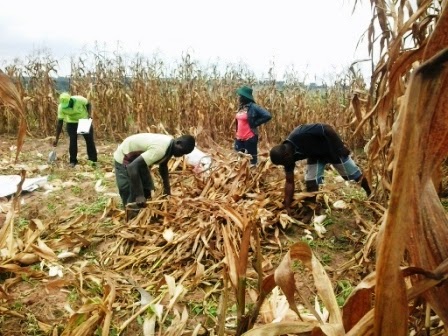
Story by Kofi Adu Domfeh/in Marrakech, Morocco


Please listen to audio report...

https://soundcloud.com/kofi-adu-domfeh/africa-must-do-more-than-increase-agriculture-productivity


Tuesday, October 7, 2014

African CSOs to interrogate climate smart agriculture at CCDA-IV

African civil society groups attending the Fourth Conference on Climate Change and Development in Africa (CCDA-IV) will be interrogating climate smart agriculture as a subject that has evoked significant interest.

This year’s conference focuses on agriculture with the theme: “Africa can feed Africa now: translating climate knowledge into action”.

The agriculture sector accounts for the Africa’s largest share of GDP – to sustain food production, climate smart agriculture is being promoted to sustainably increase productivity, resilience and enhance achievement of national food security.

“Climate smart agriculture is the dominant issues because it’s a very emotive issue; it is an evasive issue and we want to see as Africa what it means for the priority climate change discussions – that is adaptation,” stated Mithika Mwenda, Secretary General of the Pan African Climate Justice Alliance.

In a Pre-CCDA-IV Civil Society Consultative Workshop, CSOs under the auspices of PACJA, have been sharing ideas and discussing strategies on how to better support vulnerable African men and women, especially framing the narrative of climate compatible development.

“We believe that African countries are doing their best in accordance with the Climate Change Convention to respond to climate change impacts. Such collective unities like Clim-Dev Africa, along our countries individual efforts, are demonstrations that we even exceeded what it is for us to do”, said Mithika. “The CCDA and other spaces provide us opportunities to look back and see where we are and as the Civil Society, we will work with other stakeholders in such efforts as we believe this the only way to defeat the challenges presented by the growing climate threats”.

The CCDA-IV holding in Marrakech, Morocco  from 8-10 October 2014, is organised through a tripartite collaborative of the African Union Commission (AUC), the African Development Bank (AfDB) and the United Nations Economic Commission for Africa (UNECA) as part of the Climate for Development in Africa (ClimDev-Africa) programme.

According to Madam Olushola Olayide of the African Union Commission, the theme falls in line with the AU’s 2014 Year of Agriculture and the 10th anniversary of the Comprehensive African Agricultural Development Programme (CAADP), an initiative to boost agricultural productivity in Africa.

The Conference provides farmers, researchers, policy makers, civil society organizations, media and other stakeholders with the opportunity to exchange ideas on the ways in which to deepen and broaden understanding, analysis and advocacies on climate change and emerging sectoral issues in international dialogue processes.


Story by Kofi Adu Domfeh/ in Marrakech, Morocco 

Saturday, August 9, 2014

Agric transformation under spotlight of Climate Change and Development in Africa confab

The 4th Climate Change and Development in Africa (CCDA-IV) conference will put spotlight on climate knowledge opportunities that can transform agricultural production systems to feed Africa sustainably.

In recognition of 2014 as the year of agriculture, the CCDA-IV will be convened in Marrakesh, Morocco from 8-10 October 2014 on the theme: "Africa Can Feed Africa Now: Translating Climate Knowledge into Action". 

The Conference series is a policy influencing space organized each year under the auspices of the Climate for Development in Africa (ClimDev-Africa) Programme.

ClimDev-Africa is a consortium of three leading pan-African institutions – the African Union Commission (AUC), the United Nations Economic Commission for Africa (UNECA) and the African Development Bank (AfDB).

The overall objective is to provide a platform for deliberating on how Africa can utilize climate knowledge to transform agricultural production systems in order to sustainably feed itself and improve the socio-economic wellbeing of its people.

To continue on a trend that commenced during CCDA-III, this year’s conference will lay focus on impacts of climate change on vulnerable groups and also integrate strong participation of civil society groups, with the aim of perceiving the realities, opportunities and challenges faced at the grass-root level, for which policy makers and researchers in attendance can begin to design interventions.

The targeted vulnerable groups include farmers, women, the youth and pastoralists.

CCDA is a unique space where stakeholders come together to discuss the interrelationships between climate change and development, with Africa as the main focus.

ClimDev-Africa partners, as well as other stakeholders, share their programmes’ achievements as well as challenges they face on key climate change issues and seek new knowledge on ways to better cope with them in the interest of Africa’s development.

It further builds a consensus amongst policy makers, academicians, researchers, practitioners and other stakeholders on best approaches of integrating climate change opportunities in policies, strategies, planning and practices in Africa.

Translate

Popular Posts