...This Agenda is a plan of action for people, planet and prosperity... We are resolved to free the human race from the tyranny of poverty and want and to heal and secure our planet…

Search This Blog

Showing posts with label Illegal mining in Ghana. Show all posts

Thursday, December 18, 2025

Environmental Protection: Communities in Ghana can resist illegal mining without losing their livelihoods


Awakwai is a farmer in the Sika Nti community at Asankragua in the Western Region. When he migrated to the community to work on a cocoa farm to make a living, he entered into a land tenure arrangement to farm his cocoa. But he will soon lose the land as the owner sold the land out for mining. 


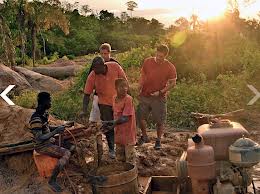
Without a farm and any alternative source of income, the young man was faced with a dilemma: the choice to either to live on empty stomach or take up employment at an illegal mining site, locally known as ‘Galamsey’.


The Chief of Jomoro, Nana Kwame Ketebu II, acknowledged that “any survival that affects the environment is unsustainable.”  


He also observed “the current situation of galamsey is seen in the nature of our rivers; in the nature of our forests; in the nature of destruction of the environment”.


Two years ago, Preferred by Nature, a global non-profit organisation, started working with partners on its first cocoa project called “Wassa Amenfi Cocoa Landscape Initiative (WACLI)” in Ghana to support farmers facing low-income levels, climate change, market pressure and declining yield.


“In doing so, the same question always kept coming back to us from many different actors across many different sectors; how can you work with cocoa without addressing the issue of galamsey?” said Jakob Nordborg Ryding, Senior Director of Strategic Projects at Preferred by Nature.


He noted that galamsey is currently one of the most severe risks to farmers, communities and Ghana’s cocoa future. “It’s contaminating rivers, it’s degrading soils, it’s dividing communities,” he said.


With over 30,000 hectares of cocoa farms lost, Ghana’s environmental and agricultural destruction through illegal mining is driving socio-economic collapse. There is high farmer displacement and social fragmentation, and most young people are dropping out of schools to work in mining.


Rikolto and Preferred by Nature are mobilising cocoa communities against Galamsey destruction for long-term livelihoods and health. They are adopting a three-pronged approach in community mobilization, alternative livelihoods, rehabilitation and alliances to halt and reverse the Galamsey crisis.


“Together with Rikolto, we will strengthen communities to advocate and organize against galamsey; we will create income and business opportunities that help vulnerable farmers resist galamsey and improve the long-term viability of cocoa farms; and we will begin the phytoremediation and agroforestry to restore the damaged mining areas and ensure the land is productive again,” explained Jakob at the project launch in Accra.


The project is described as a starting point, a platform to test real solutions on the ground through the direct involvement of the communities, while expecting all stakeholders to act.


According to Abdulahi Aliyu, Global Director, Sustainable Cocoa and Coffee Programme at Rikolto, the communities are aware of the negative effects of galamsey, especially when they are compelled to buy sachet water to irrigate their crops. And he believes these communities are willing to stop the menace of galamsey. 


“Children are abandoning school to look for jobs on galamsey sites,” he observed. “If we want to talk about descent income for smallholder farmers, do we factor the issue that farmers buy water to apply chemicals on their farms which adds up to the cost of production?”


Mr. Aliyu noted that Ghana is losing its pride in the golden bean as cocoa is under the threat of illegal mining, known popularly as ‘galamsey’, hence the need for urgent action.


In turning the tide through the mobilization of cocoa communities against Galamsey, the project will introduce citronella cultivation and the setting up of processing plants to build resilient local economies.


The path to sustainable change will involve the establishment of three pilot processing plants, expansion of citronella cultivation, initiation of phytoremediation trials and full community ownership before project exit.


Some 3,000 farmers, including 1,500 women and 1,500 men from 12 communities in three districts, will be targeted, and the focus area will the proactive inclusion of women and youth in citronella processing ownership.


The 5-year (2025-2030) initiative titled “Turning the tide: Mobilizing cocoa communities against galamsey destruction for long-term livelihoods and health” with support from the Civil Society in Development (CISU) Denmark, has the overall goal to empower vulnerable cocoa-dependent communities to resist, consolidate, and sustainably reverse the advance of Galamsey.


The Head of Cooperation of the Danish Embassy in Ghana, Ms. Rikke Enggaard Olsen, believes the project is important as it empowers the local communities and builds partnerships to take action against galamsey.


“For a country that supplies around 20% of the world’s cocoa, the stakes couldn’t be higher faces by an issue such as galamsey. Cocoa is not just an export commodity; it represents jobs, community identity and multi-generational aspirations. 


“When farmlands are destroyed and water sources contaminated, communities lose their resources that they need for sustainable growth,” she stated. 

by Kofi Adu Domfeh

Monday, August 15, 2016

Onslaught of galamsey on mining concessions in Ghana, a threat to investor confidence

Mining industry watchers have posited that Ghana’s gold mining sector could collapse if the trend of illegal miners encroaching on concessions of mining companies is not halted. 

According to the Ghana Mineworkers Union (GMWU), the spate of illegal miners taking over concessions is a scare to the investor community.

General-Secretary of the Union, Prince William Ankrah describes as “shameful and barbaric” the uncontrollable levels of the galamsey onslaught on the concessions of legally registered businesses.

“Mining companies such as AngloGold Ashanti, Obuasi Mine witnessed a gruesome attack by illegal small scale miners on its concession, resulting in the death of a top management staff of the company. Again, Owere Mines in Konongo was also not spared in this nefarious enterprise as these hoodlums invaded and took control of the Mine's concession for weeks, while owners and our members watched helplessly,” he observed.

The gradual take-over of the Obuasi mine by the illegal operators forced AngloGold Ashanti to file a suit against the Government of Ghana at the International Court of Arbitration, seeking protection on its concession.

Prince Ankrah describes the development as unfortunate, emphasizing that “Obuasi is a major asset to our nation and for that matter we all need to be careful so that we don’t create any scare that will allow that mine to remain dead even though it’s a rich resource”.

The Anglogold Ashanti, Obuasi Mine, currently undergoing operational reforms, is said to viable, hence the need for all stakeholders to be on board for its resuscitation.

The Minerals Commission recently constituted a District Mining Committee at Obuasi to oversee the peaceful exit of the unlicensed miners from AGA concession to the demarcated areas within the lease area surrendered by the company.

The move is expected to forestall what interest groups have described as a near-crisis situation at Obuasi. 

Chairman of the Committee, Engineer Kwaku Frimpong Kuma, was part of a team that set up underground operations about 20years ago within the area of Anglogold’s concession under contest.

He is confident the committee’s work will yield the requisite results to the satisfaction of both interest parties.

“At this stage, it’s going to be a win-win situation…it will be solved to the joy of both parties and then Obuasi will come back to life,” he stated.

Prince William Ankrah is also hopeful the new arrangements will be workable to help bring a closure to the menace of illegal miners taking over the concession of Anglogold Ashanti.

“Let’s hope that it will yield the needed results…let’s all be confident that it will work out,” he said. “It’s evident that Obuasi can bounce back and remain very vibrant for the economy, so that’s what we want to see and we pray that really materialize”.

The Ghana Mineworkers Union, has however, stated that it will not hesitate to withdraw labour services to the industry all over the country if the menace of illegal mining and the threat to the safety and security of members is left unchecked.

“Considering the pace and nature of the destruction by illegal small scale mining and its consequences on the environment, it would be extremely difficult to bequeath anything meaningful to generations yet unborn if we continue on this indiscriminate tangent with impunity,” said Prince Ankrah.

By Kofi Adu Domfeh

Tuesday, March 26, 2013

Ghana moves to make illegal gold prospecting an expensive enterprise

Government is conducting a geographical investigating into seven sites for alluvial and primary gold deposits to be parceled out to small-scale miners.

The sites, covering an area of 368 km2, are among 77 sites blocked out as part of interventions to curb galamsey activities in the country, announced Lands and Natural Resources Minister, Alhaji Inusah Fuseini.

He observed that most of the illegal activities are on large scale mining concessions with the active connivance of the concession owners.

“These concession owners are breaching the terms of their licenses and let me state that punitive measures will be taken against any concession owner who is caught collaborating with these illegal miners”, he said.

The Minister noted that it is about time the licensing regime is reviewed “so that people don’t just keep their prospecting or recognizance licenses forever; inviting galamsey operators to come and be working on those lands”.

Alhaji Fuseini is also seeking an amendment of the Minerals Act 703 to make illegal mining a strict liability offence to protect the interest of the future generation.

Illegal mining activities in Ghana killed an estimated 300 lives between 2011 and 2012. There are also frequent mine accidents as well as other socio-economic and environmental challenges which have bedeviled Ghana’s mining environment.

Alhaji Fuseini says illegal gold prospecting should be made an expensive enterprise because the operations of the miners “have serious national security implications”.

According to him, the country could be moving towards a resource curse if the menace of galamsey is not curbed, stating that the veil must be removed to expose people behind galamsey operations.

“The illegal miners operate close to local communities in the full glare of all stakeholders… The connivance of some chiefs, landlords, farmers and opinion leaders with foreigners to operate in remote areas is very worrying”.

The Minister has been addressing the Expanded Council Meeting of the Ghana Chamber of Mines holding in Kumasi.

Alhaji Fuseini says government has developed guidelines for the utilization of mining royalties by local assemblies to address complains of inappropriate use of the royalties.

“The Assemblies’ share of the royalties is no longer for recurrent expenditure”, he stated. “The use of revenue from royalty payment will be benchmarked to enable the members of the Assembly and the communities within the jurisdiction of a district assembly to track the utilization of such royalty payments”.

He added that government is piloting a policy intervention to ensure mining royalties are paid monthly instead of the current quarterly basis.

Chief Executive of the Chamber of Mine, Dr. Toni Aubynn, reiterated calls for the establishment of a Minerals Revenue Fund, modeled along the lines of the Petroleum Revenue Fund, to remove what he termed the age old suspicion of the benefits from the receipts from mineral resources.

He noted that such Fund will allocate “how much should go to government budgets, how much to be saved for future generation and how much goes to clearly defined visible developmental projects”.

Story by Kofi Adu Domfeh

Tuesday, March 5, 2013

New report shines light on small-scale mining

Small-scale and artisanal mining could be a source of sustainable livelihoods for millions of marginalised people, say researchers at the International Institute for Environment and Development (IIED).

Governments and development agencies often see the sector only as a problem. In Ghana, small-scale mining has been shrouded in illegalities, often involving foreign nationals.

The new report identifies the serious knowledge gaps in the sector and sets out options for a major new IIED project-in-the-making – this project will aim to help policymakers ensure small-scale mining meets its potential to improve lives and take better care of local environments.

This will be done by connecting stakeholders, including miners and their communities, and ensuring that better quality information is generated and used effectively in policymaking at local, corporate, national and international levels.

“Small-scale and artisanal mines can be a force for good just as small-scale forestry and agriculture are – but right now they operate in a hidden world,” says Sarah Best of IIED. “We want to identify ways to overcome the challenges — in information, investment and institutions — that prevent small-scale mining from realising its potential to contribute to sustainable development.”

Small-scale mining produces about 85 per cent of the world’s gemstones and 20-25 per cent of all gold. Its mines provide jobs and income for 20-30 million of the world’s poorest people and support the livelihoods of five times that number.

In Ghana, small-scale mining activities contributed about 30 percent of the 3.6 million ounces of gold produced in 2011. The State however failed to make enough revenue from the activities of small scale mining due to the illegality of some players in the sector.

The Ghana Chamber of Mines has advocated that the significant operations of the smallscale miners be mainstreamed for the economy to benefit.

The Ghana Mineworkers Union has also emphasized that the registration process for small scale miners must be demystified to discourage illegal mining.
 
Overall, artisanal and small-scale mining (ASM) employs ten times more people than large-scale mining. But it takes place in very remote areas, usually involves poor and vulnerable people, — including women and children — and is renowned for severe pollution and harsh working conditions. 

Despite all of this, development agencies and national authorities have historically given little attention to the sector and how to make it sustainable, instead focusing on large scale mining.

Rather than supporting small-scale mining, governments’ policies are often poorly designed or implemented, or even repressive. The miners themselves lack access to the rights, financial services, market information and technology they need to make this is a prosperous economic activity with reduced environmental impacts.

As a result, many are often driven to operate illegally – and it is this illegality that has biased attitudes about the whole sector.

Donors often ignore small-scale and artisanal mining, perceiving activities such as small scale agriculture and forestry to be more ‘positive’ livelihoods for the poor. Large-scale mining companies often only engage with the small-scale sector in cases of conflict over land and resources. 

The IIED report shows that, while there is good hands-on experience and innovation on-the-ground — for instance, with some governments adopting more inclusive policies and with the beginnings of ethical sourcing — these are often not widely known about, or face huge implementation challenges which stall progress. 

“Governments, development agencies and the private sector have tended to overlook small-scale mining, seeing it as a source of problems or something that should not exist,” says Abbi Buxton of IIED. “This neglect has to end, particularly as the demand for mineral resources continues to grow.”

IIED’s new programme of work follows earlier work on mining.

In 2000-2002, the institute ran the ‘Mining Minerals and Sustainable Development’ (MMSD) project, a major review that gathered evidence and engaged stakeholders around the question of ‘how can mining and minerals best contribute to the global transition to sustainable development?’

In 2012, IIED published a ten year review to assess progress and identify the way ahead. Artisanal and small-scale mining was identified as an area where little progress has been made over the past decade. This new programme will seek to address some of the underlying and ongoing challenges to ensure progress over the next ten years.

It will overcome weaknesses in the way that knowledge is gathered and influences policy, such as the lack of information from artisanal or small-scale mining communities, and limited coordination between sector stakeholders.

It will promote dialogue, learning and leadership at national and international levels and find practical solutions to sector-wide challenges, such as child labour, health hazards, informality, human rights, pollution, and transparency in supply chains. It will also embrace diverse collaborations at national and international level.

The new report presents several programme options that IIED has identified following initial consultations with sector stakeholders. The Institute now welcomes responses to these options and expressions of interest in collaboration.

The London-based International Institute for Environment and Development (IIED) is an independent, non-profit research institute that provides expertise and leadership in researching and achieving sustainable development. 

Story by Kofi Adu Domfeh

Monday, March 4, 2013

Minerals Commission seeks public support to curb illegal mining

The Inspectorate Division of the Minerals Commission is confident the operations of its special taskforce will help curb the spate of illegal mining activities in the country.

Officials however say sustained success will depend on public cooperation and collaboration to expose individuals and syndicates involved in promoting illegal gold mining.

The increasing rate of foreigners in Ghana’s small scale mining sector has been a source of grave worry to the citizenry.

Gold mined illegally leads to land degradation, destruction of farmlands, pollution of water bodies, high accident rates leading to death at the mines and rise in social vices in communities. The illegal miners also do not pay royalties and taxes to the State.

“We’re liaising very well with the national security sub-committee on lands and natural resources and we’ve been going round arresting, especially the foreigners in the field; that one is never done anywhere in the world that foreigners will go to some place and they’ll start illegally taking up their natural property”, said Joseph Frimpong, a Mines Inspector in the Ashanti region.

There is presently a renewed drive to flush out such illegal miners to save the environment and protect natural resources.

Lands and Natural Resources Minister Alhaji Inusah Fuseini has stated that moves have been initiated to identify and weed out companies with expired licenses who are illegally leasing out concessions to galamsey operators.

He also wants to expose politicians and chiefs involved in galamsey operations

President John Mahama has also assured the security agencies of adequate support to flush out illegal miners across the country.

Mr. Joseph Frimpong however believes uprooting the illegal activities requires deeper collaborations, especially in reporting practices at their early stages.

“For small scale mining, no foreigner is permitted, no foreigner is allowed”, he emphasized. “Yes we welcome foreigner but we’re not expecting that they go into illegal activity. Landlords should report them, that even though they’ve taken rooms and accommodation in your houses, they are engaged in illegal activities”.

Mr. Frimpong has commended the proactive posture of interest groups in the Ahafo Ano North District of Ashanti to uproot galamsey activities.

He expects local and traditional authorities as well as other interest groups to be conversant with laws governing mining in the country, especially the Minerals and Mining Act, Act 703 and subsequent legislative instruments.

Meanwhile, trade and business groups are taking keep interest to sensitize members on the need to get involved in the national drive to discourage illegal mining.

President of the Ghana Employers Association, Terry Darko, says businesses have the responsibility to speak out against such practices.

“All of us are witnessing the way small scale mining is destroying our environment. As businesses we may need to speak because if the environment is compromised, it will affect the health and safety of our workers of today and the general tomorrow and it can create problems for all of us. So let us not think that it is the responsibility of only the security agencies”, he noted.
 
Story by Kofi Adu Domfeh

Saturday, February 23, 2013

Interest groups join forces to uproot illegal mining

There is an insurgence of armed robbery, prostitution and drug abuse in Subriso, a galamsey prone community in the Ahafo Ano North District of Ashanti.
 
Farmlands are being destroyed whilst water bodies and the environment are gravely polluted as a result of illegal gold mining.

A collaborative initiative has been mounted to rid Subriso and other communities in the District of illegal mining operatives.

Interest groups, including the district assembly, Minerals Commission, Environmental Protection Agency and traditional authorities are devising strategies to get tough on the galamseyers.

Manfomanhene, Nana Kwame Ntim has decried the reluctance of the illegal miners to submit to regulation to minimize the negative impact of their activities in all aspects of livelihood in the area.

He has vowed to take all the necessary action to uproot illegal miners who have refused to formalize their operations, emphasizing that “the Asantehene Otumfuo Osei Tutu II will not take kindly to any chief who condones illegal mining in his area”.

The illegal gold miners have been disrupting the prospecting activities and operations of Pelangio Ahafo Limited and looted gold worth millions of dollars.

A court recently ordered the police to shut down pits created by ‘galamsey’ operators after the company tool legal action on illegal activities on its concession.

According to District Chief Executive, David Addai Amankwaah the Assembly is ready to support the small scale miners to legally prospect gold.

He stated that the District Security Council has taken steps to minimize the social vices associated with galamsey operations, including boosting the capacity of the district police command and upgrading facilities.

Ashanti Regional Director of the EPA, Isaac Osei noted the country would need to curb illegal mining now to save the future.

“We are moving towards a very dangerous situation”, he observed. “If they are regulated, then the level of destruction will totally be minimized. But the people are very difficult to convince to come and register and that the basis of the problems that we are facing in this country”.

The Mineral Commissions expects all stakeholders to show commitment in curbing illegal mining.

Story by Kofi Adu Domfeh

Translate

Popular Posts