...This Agenda is a plan of action for people, planet and prosperity... We are resolved to free the human race from the tyranny of poverty and want and to heal and secure our planet…

Search This Blog

Showing posts with label agriculture in Africa. Show all posts

Friday, September 9, 2016

A concrete Action Plan to Seize the Moment for African Agriculture

In the final communiqué from the Africa Green Revolution Forum (AGRF2016), delegates pledged over the next 16 months to focus on smallholder farmers to achieve significant growth in agriculture productivity and profits in at least 20 countries.

This will be achieved whilst unleashing US$200 billion in investments in the agriculture sector. The action plan also commits countries to developing a public “scorecard” that would track progress and hold them accountable.

Specific commitments include unlocking 10 percent of public expenditures for agriculture, as many countries agreed to do when they first joined the CAADP partnership. Action steps also will involve launching innovative approaches to providing finance for smallholder farmers and agribusinesses and working through initiatives such as GROW Africa to bring in at least $20 billion in private investment.

“This has been the most productive AGRF since the call to launch the Green Revolution in Africa was made ten years ago by former UN Secretary General Kofi Annan,” said Agnes Kalibata, President of the Alliance for a Green Revolution in Africa (AGRA), which serves as the secretariat for AGRF. “As an alliance, AGRA is committed to working every day with our partners to ensure the ‘Seize the Moment’ campaign has a tangible, meaningful impact in the lives of millions of Africans.”

The AGRF 2016 delivered a massive infusion of both financial, political and policy commitments to African farmers and agriculture businesses on a continent eager for new, more inclusive opportunities for economic growth.

“Seize the Moment” was first launched in April at the Comprehensive African Agriculture Development Plan (CAADP) Partnership Platform in Accra, Ghana. It has quickly become a rallying point for accelerating work around the African Union’s 2014 Malabo Declaration on Accelerated Agricultural Growth and the United Nations’ Sustainable Development Goals (SDGs).

A key highlight from AGRF 2016 included the launch of the African Agriculture Status Report (AASR) for 2016. The report detailed progress over the last decade and identified key priorities for moving ahead.

The head of the United States Agency for International Development (USAID), Gayle Smith, launched a global report entitled “A Food Secure 2030.” She told delegates that as President Barack Obama’s administration comes to a close, she was confident that the US would continue to be deeply engaged in African agriculture for many years to come. She pointed to the overwhelming support across the political spectrum for President Obama’s Global Food Security Act and his Feed the Future initiative.

Other promises include pledges by the Bill & Melinda Gates Foundation and the Rockefeller Foundation to continue their generous support for African agriculture and particularly for partnerships established by AGRA over the last ten years.

Also, Dr. Kanayo F. Nwanze, President of the Rome-based International Fund for Agricultural Development (IFAD), was awarded the inaugural Africa Food Prize.

Regional institutions led by the African Union and the New Partnership for Africa’s Development (NEPAD) committed to driving the CAADP biennial review process and implementing the scorecard for tracking progress in the “Seize the Moment” campaign for agricultural transformation.

AGRF 2016 attracted more than 1,500 delegates from 40 countries, including African Heads of State, global business leaders, government ministers, farmers, agribusiness firms, financial institutions, NGOs, civil society groups and scientists, as well as international development and technical partners.

They pledged more than US $30 billion dollars in investments over the next 10 years to increase production, income and employment for smallholder farmers and local African agriculture businesses.

The AGRF partners concluded AGRF 2016 with an agreement that the 2017 AGRF will be co-hosted by the Government of Côte d’Ivoire, AfDB and AGRA in Abidjan, Côte d’Ivoire.

Saturday, June 28, 2014

African governments urged to boost agriculture as AU leaders meet

As the African Union summit takes place in Malabo, Equatorial Guinea, the Africa Progress Panel urges African leaders to invest at least 10 percent of their national budgets in agriculture, fulfilling a pledge first made in Maputo in 2003. So far few countries have achieved the 10 percent target.

With about two thirds of all Africans depending on agriculture for their livelihoods, boosting agriculture is an essential strategy to reduce poverty and inequality, allowing more people to benefit from Africa’s impressive economic growth.

“If we want to extend the recent economic successes of the continent to the vast majority of Africa’s inhabitants, then we must end the neglect of our farming and fishing communities,” said Kofi Annan, Chair of the Africa Progress Panel.

This year’s Africa Progress Report Grain, Fish, Money: Financing Africa’s green and blue revolutions finds that agriculture will allow Africa to capture the commercial and economic opportunity of the world’s rapidly growing demand for food, which is expected to double by 2050.

“The world’s burgeoning population needs to be fed and Africa, our continent, is well positioned to do so. We have enough resources to feed not just ourselves but other regions too. We must seize this opportunity now,” Mr Annan said, adding that “Africa’s productivity levels, already beginning to increase, could easily double within five years”.
 
This year’s Africa Progress Report shows that transforming the continent’s agriculture requires that smallholder farmers have better access to both financial services, including loans and insurance, and infrastructure.

Mr Annan indicated that “unleashing Africa’s green revolution may seem like an uphill battle, but several countries have begun the journey”. Innovative technology developed by young Africans provides another opportunity to improve smallholder agriculture. Mr Annan said “impressive innovation and smart government policies are changing age-old farming ways.”

In countries, such as Nigeria, Ethiopia, and Rwanda, government efforts to boost their agricultural sectors are already bearing fruit, with rapid agricultural growth driving their national economies.

“We have to significantly boost our agriculture and fisheries, which together provide livelihoods for roughly two-thirds of all Africans,” Mr Annan said.

“As the Africa Progress Report 2014 lays out in telling detail, agriculture can be the engine that drives the kind of growth that Africa needs; growth that benefit everyone including the rural poor... Africa will come into its own as a global food powerhouse”, said Linah Mohohlo, governor of the Central Bank of Botswana and member of the Africa Progress Panel.
 
Chaired by Kofi Annan, former Secretary-General of the United Nations, the ten-member Africa Progress Panel advocates at the highest levels for equitable and sustainable development in Africa. The Panel releases its flagship publication, the Africa Progress Report, every year in May.

Thursday, February 6, 2014

Ghana’s commitment to SARD-SC project assessed

Key partners working under the Support for Agricultural Research and Development for Strategic Crops (SARD-SC) in Africa have been assessing Ghana’s commitment to provide counterpart funding to benefit from the project.

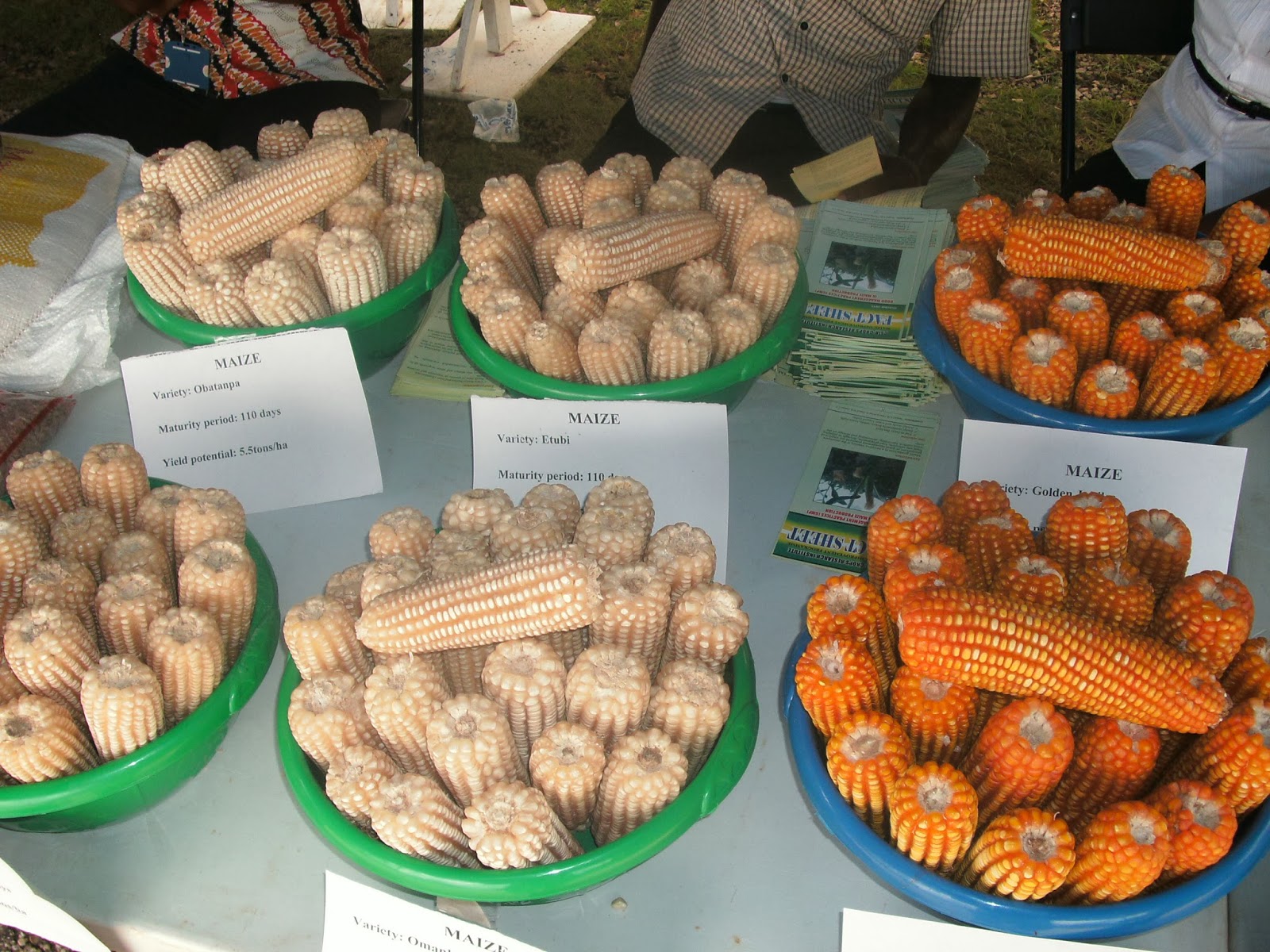
The $63 million project focuses on four commodities – rice, wheat, maize and cassava – identified by African Heads of States as key to making impact on farmer livelihoods.

The five years project took off in January 2013, with funding from the African Development Bank (AfDB) to improve food security and lift the income levels of farmer in Africa.

Governments of the 20 beneficiary African countries, including Ghana, are expected to provide counterpart funding – including land, office space, and laboratories – as conditions to access the support.

Ghana has interest in maize and rice identified as critical cereals crops needed to increase productivity.

“We’ve been communicating with colleagues and they have indicated to us the involvement of the government in terms of infrastructure and personnel; but we need to document it to show the bank funding it that Ghana is meeting its commitment,” said Project Coordinator, Dr. Chrysantus Akem.

The SARD-SC is a research, science, and technology development initiative, which offers farmers better access to markets, improve livelihoods, and tackle poverty through enhanced capacities of beneficiaries to sustainable development in the region.

“We really believe that if that grandmother is growing maize and the yields are very low, through this project we can introduce new varieties that can double of even triple yields of those maize, we’ll make a difference,” noted Dr. Akem of the International Institute of Tropical Agriculture (IITA).

The target of the project is to raise productivity by 20% in the four commodity areas.


Story by Kofi Adu Domfeh

Translate

Popular Posts