...This Agenda is a plan of action for people, planet and prosperity... We are resolved to free the human race from the tyranny of poverty and want and to heal and secure our planet…

Search This Blog

Showing posts with label gold mining in Ghana. Show all posts

Wednesday, April 13, 2016

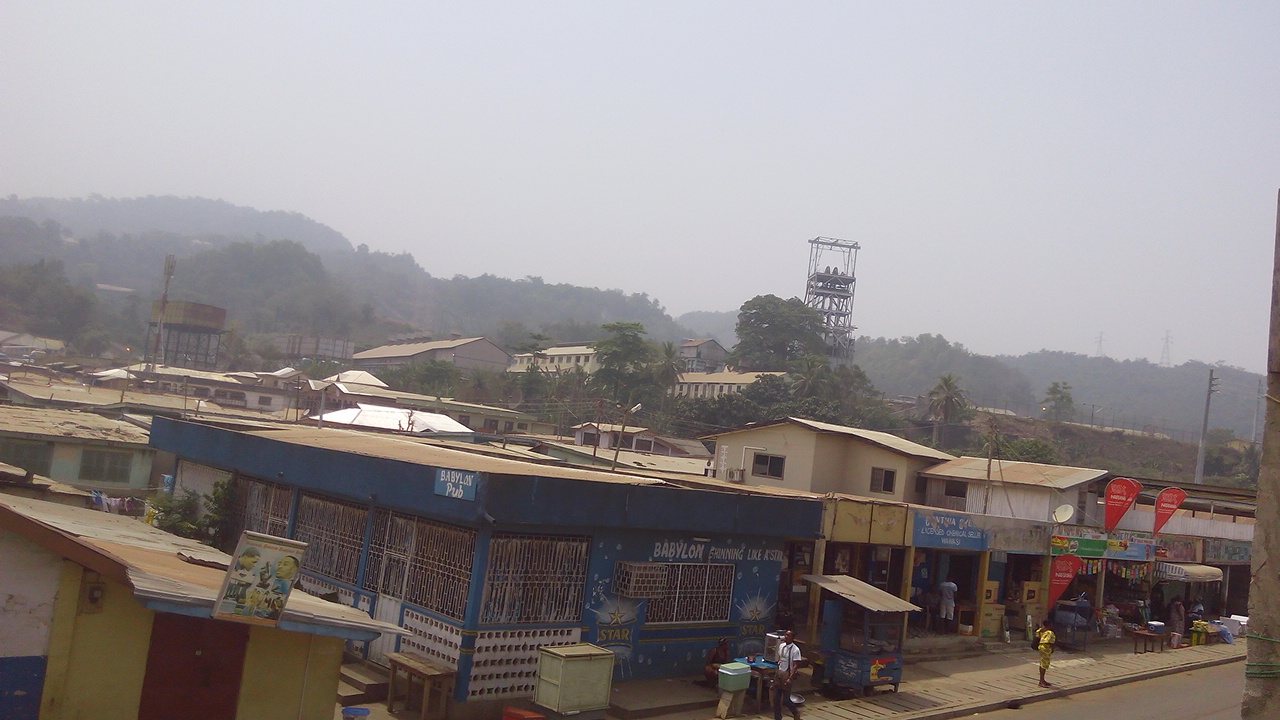
Obuasi residents campaign for the survival of the gold city


A group of concerned residents of Obuasi has embarked on a campaign to demand urgent measures to salvage the local economy of Ghana’s largest gold city from total collapse.
 
AngloGold Ashanti’s downsizing of operations at the Obuasi mine has had significant economic and social impacts in the Obuasi municipality and adjourning districts.

Recent invasion of sensitive areas of the mine by a group of small scale miners has heightened the state of insecurity and stalled the limited mining activities of AGA.

The “Obuasi Must Live Coalition” says the invasion of sensitive areas of AGA’s concession by small scale miners is unacceptable.

At a press conference, Coordinator of the Coalition, Prince Kwame Aboagye, expressed disappointment that in spite of the obvious invasion of the company’s concession by small scale miners, both the Municipal and Regional Security Councils have not thought it expedient to swiftly order security personnel to move in and secure this concession.

“It has become apparent that in their desire to satisfy a group of small scale miners, the RCC is unconsciously killing the very hen that lay the golden egg. We cannot as a country support small scale mining at the expense of the survival of AngloGold Ashanti,” he read a statement by the Coalition.

Whilst calling on both AngloGold Ashanti and the small scale miners to resort to dialogue as the only sustainable means of ensuring a peaceful co-existence, the group says the military should provide security for AngloGold Ashanti to resume their operations.

Among other demands, the group wants government to come clear on measures it has taken to make Anglogold Ashanti’s relinquished 60 percent concession available to small scale miners.

“The Obuasi Municipal Assembly, working with the small scale miners should take advantage of AGA’s offer of free technical support to develop this relinquished concession,” said the statement.

AngloGold Ashanti has also been asked to immediately publish their revised concession of 40 percent which they have kept to ease policing of the concession.

“It is possible to have a thriving AngloGold Ashanti mine, and a booming legally registered and regulated small scale mining industry. There is no reason for conflict between the two…Obuasi must not die,” said Prince Aboagye.

Story by Kofi Adu Domfeh

Monday, February 15, 2016

Ghana’s gold mining city under siege


Gold mining at Obuasi in the Ashanti region is under siege as small scale miners demand part of Anglogold Ashanti’s concession for their operations.

The mining giant has shut the mines following a clash between illegal miners and staff of the company, leading to the death of a senior management member.

Industry watchers say Obuasi needs an industrialization plan to pacify the hungry and angry youth of the mining town.

The dwindling fortunes of Anglogold Ashanti Obuasi mine have been a worry to many residents.

The company in 2014 put its activities at Obuasi under a two-year break for a restructuring process to make the mines profitable.

This has left over 5,000 workers losing their jobs.

Hopes of the mine’s revival were dashed when Randgold Resources Limited decided to terminate an investment agreement entered into with AngloGold.

Following a recent clash between illegal miners and Anglogold staff, which led to the death of the company’s communications director, the company has had to redraw its essential services.

The Centre for Social Impact Studies (CeSIS) has documented the socio-economic impact of AngloGold Ashanti’s operational downscaling at Obuasi.

Executive Director of the NGO, Richard Ellimah, says livelihoods are negatively impacted when there are no alternatives to mining.

“Once the fortunes of the mines begin to dwindle, it affects the broader economy of Obuasi,” he stated. “Government should, as a matter of urgency, create a system where Ghanaians who want to do mining – legal small-scale mining – have the opportunity to do so,” he re-iterated.

Anglogold Ashanti has agreed to release 60percent of its concession but interest groups say government need to act swift in ceding the land to legal small-scale miners.

“We are operating at the abandoned areas of Anglogold Ashanti. Right now, where are operating, we’ve gone as far to the Minerals Commission and in connection with the part of the concession ceded off, none of those areas are within Obuasi,” said Rufus Borry, General Secretary of the small scale miners association at Obuasi.

The group wants stakeholder’ dialogue and negotiation deepened in ceding off part of Anglogold’s concession to small scale miners.

The leadership is also streamlining registration of the small scale miners to clamp down on illegal operations and tax mobilization from members.

For over ten decades, mining has been the main stay of the Obuasi economy.

The industry has contributed immensely to the country’s development but local mining communities say the negative impact of mining outweighs the positive socio-economic impact on their livelihoods.

Residents are divided on whether the operations of Anglogold or small scale mining should thrive.

But there is consensus that the economy of Obuasi is presently under siege.
The Obuasi local assembly is worried of no investor interest if the conflict between Anglogold and small scale miners persists.

There are also fears of communities turning into ghost towns when the mine is shut.

But Richard Ellimah says this can be averted when the economy of Obuasi is diversified to reduce the dependence on mining.

The bigger responsibility, he says, rests with the municipal assembly to create an alternative industry, including tourism, entrepreneurship development and farming.

Anglogold says it will re-open the Obuasi mine when it is assured of the security of its staff.

Tuesday, March 31, 2015

GRA tasked to retrieve Gh6.6m from Prestea Sankofa Gold

The Ghana Revenue Authority (GRA) has been tasked to retrieve an estimated Gh6.6million in outstanding mineral royalty from Prestea Sankofa Gold Limited, a gold mining firm in the Western region.

The company has failed to pay royalties for 2012 and 2013 after exporting over Gh130million worth of gold in the two years.

The default in payment is contained in the Ghana Extractive Industries Transparency Initiative (GHEITI) Report for 2012 and 2013.

“Whatever the excuse, it’s something that is due the State and they have to pay,” said Kwadwo Asafo-Aidoo of Boas & Associates, which prepared the GHEITI Report.

Prestea Sankofa is essentially a Ghanaian gold mining company with the Ghana National Petroleum Corporation (GNPC) holding majority shares.

The company produced 21,237 ounces of gold in 2012 at total revenue of $36,012,936 and an additional 22,853 ounces at revenue of $31,760,747 was recorded in 2013.

According to the GHEITI report, the company paid over Gh1.5million to the GRA over the period, but the amount covered outstanding royalty payments for 2011.

Liquidity and production challenges are some factors attributed to the company’s failure to honour the obligation.

But Mr. Asafo-Aidoo says the appropriate legal penalties should be meted out to the company.

“If these people have waited for two years without any payment of royalty, then you can imagine the quantum of liability… the GRA is at the moment taking up that issue with them and I believe that in the shortest possible time they should come up with that payment,” he stated.

The GHEITI Report has requested the GRA to investigate and reconcile the revenue to royalty payment and to recover the probable difference due the state.

The Report has also recommended regularization of royalty payment frequency in split quarterly payments to ensure standardization and adherence to procedures for royalty payments to promote compliance.

The Report noted that corporate tax has exceeded mineral royalty for three continuous years. “This may require further investigation and actions to ensure the sustainability of mining revenues,” it concluded.


Story by Kofi Adu Domfeh 

Translate

Popular Posts